Lately I have been writing a lot of poetry about all sorts of things, often about the things I experience in my inner world and visions and also the things I would like to see or dream into being in our world.
I was thinking about where my ideas and poetry flow from and I realised it came from a place within me which is a kind of land of poetry beauty youth and song which could be called Tir Na Nog. I wrote a poem about this beautiful place and made it into a video for you to enjoy below
Tir Na Nog
come away oh human child to the land so fair Where the stars reflect in your eyes and light your hair Where the swans glide dancing on the lake And the moon shines brightly in the wake Of a breeze that brings fragrances so fine from every land of the spirits awakening the divine Where the wolves howl from every mountain crag and the deers skip and run in the woods to brag of another round of the sun sailing round The sky blue way up high, where the night and day cycles are honoured in sacred dance oh so vital where the colours are vibrant and bright and the soul takes poetry song bird flight You will find me here amid the roses red Where their thorns bring forth blood but it is said Their beauty makes it all worth while This never land is always in our hearts For creativity wonder is its cupid darts
Talking to the trees and plants growing Creeping up into the air before sowing Their seeds in the wind to be rooted In the soil, in the ground never looted By predators but bringing forth abundance as this garden springs around, lucious and green With leaves of emerald and bronze, with their flowers seen Amid the foliage bare – I am always there Humming a tune like the bees without a care
The rain flies down in sheets soaking to the skin, in cold ecstasy cloaking Everything with a sparkly shining lustre I listen to the water drops as they pop With lazy frog song on the lake atop The lilly pads with the luminous lotus’s Opening and closing just to ask us How we wish to seek the delight of enlightenment so that we all might See its fruits blossom in suffering mankind Across the human land not here where all is kind but where there is grime, crime work and toil
The fish leap in tune with the rain and frogs a Bubbling gurgling waterfall tune, I walk a log Crossing a river and I wonder at the majesty of this place, the horses nearby neigh of the traversty That people lose this place of play In growing old, and serious but they say The youthful eternal world never went away Its just meant to be rediscovered Its a hidden treasure meant to be uncovered
Its in the sound of the rain, or in the waves that crash Its in the flowers of spring time or in the stags that bash Their horns to fight for their way Its in the dawning of each new day This land is their splendor The mirror that shows the way tender Paths that wind us in sight Of the poetry land that is our right
Its in laughter and play and lazy days where all our cares fade away Its in the bright cheerful rhyming of the celts fair Old Blighty and Ireland green you will find it there Most of all you will find it in you own dear heart When you embrace a loved one or make some art The forgotten land is all around Its just waiting to be found For me its my stomping ground One by one, in harmony entrance I will see you all there My oh my there our wishes shall fly frolicking bare
I was also considering how I was humming a tune like a bee in the poem above and I wrote a poem about that about, how my poem starts with a a humm, a consious connection to the universe like a bee. I will probably make this one into a video also and when I do I will update this page with it, but for now the written form is below.
Go tell it to the Bees
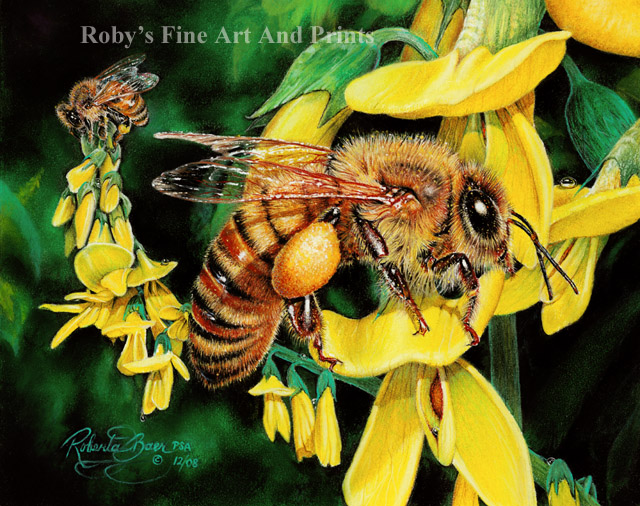
Bees hum their tune so hummm humm de humm so humm some say their tune is a drone but to me it is music yet unknown The humming of the bee goddess In her necar voice helps me to dress My rhyme with honey sticky and sweet She has a gown of stars, for this universe is ours The origin of sound is sacred and the bees hold its key It is where all poetry starts to flow within me This lovely humble insect forever in my throat Messenger of the gods, their vibration is the boat To the rich life of the hive honey divine a world of working play where everything is fine Let me be found in the flowers with these insects For they drink the ambroisia of deities of every sect and none, sometimes in rhymes they are simply having fun humm de hummm so humm is the music bees make under the sun
The universe is humming in tune with all its bees and inhabitants little insects, plants birds animals you see The earth spinning on its axis revbrates the same There is no particular deity you can really name That holds creation together in its abundant flow But the little bees humming show the way it should go Without the honey makers of the world all life would end The collapse of all civilisations is in their demise to send Their song without symbol or gong is what makes us carry on So preserve your bees and treat them with all kindness and respect Its the honours that all life anyways deserves and expects Humm de humm so humm – We are the universe hear our plee Treat all life with compassion and theres no regrets for the you and me
Consciousness is a mystery and puzzle which has yet to be solved but ancient peoples always worked for it for healing and to harmonise ourselves and our world.
For the Quero people (descendants on the Inka) they have a structure of consciousness which is represented by the Chakana. If you examine a Chakana it has 4 compass points like a cross with steps between each direction. The points on the compass represent the 4 main stages of consciousness and the steps in-between represent the three worlds.
So to take a full journey around the chakana is to go through all the stages of consciousness and also overcome the 3 worlds (lower middle and upper worlds)
In India these stages of Consciousness are also represented by Brahma in that he has 4 heads in the four directions and the sound OM is said to encompass all 4 directions, leading a person from material duality and physical consciousness to full spiritual awareness.
The 4 stages of consciousness can be described in how we handle life when each stage
For instance the first stage of consciousness is symbolised by the serpent Sachamama and this is where appears that life is happening to you or for you. This is also known as victim consciousness and it can seem life is a struggle there are many obstacles and you may feel victimised by your circumstances. In This is classed as the sleeping state, there’s been no great spiritual awakening and the person is fully situated in physical life. Also in terms of the duality of material consciousness its very black and white – good is definitely good and evil is definitely evil. This is a consciousness of judgements and victimising each other – Im good you are evil, or Im evil and you are good etc – a consiousness of shame and blame. The work and healing to be done in this stage of consciousness is to illuminate and release past stories and heal the victim, recognising yourself in the “other” including those who may have hurt us in the past as aspects of our own shadow.
The second stage of consciousness is symbolised by the Jaguar, Otorongo and in this stage of consciousness we are no longer simply victims of circumstances, but we actually become overcomers and life begins to be created by me. This direction is in the West, In this stage of consciousness we become something of a spiritual warrior – facing our fears and raising above our circumstances, this stage is about doing shadow work and facing our own inner darkness both inwardly and in the world at large. This stage of consciousness could be classed as the dreaming state and we begin to co create or dream our world into being, we may dream when we are awake in this stage and have visions. In terms of duality, then although life is created by me this is still very much a battle, good vs evil both within ourselves and in the world. In the western tradition Mercurius is also any ally for the shadow work required in this stage and he shapeshifts and takes different forms depending on our blindspots and what we need to face in ourselves. The healing required in this direction includes past life work.
The third stage of consciousness’s ally is the hummingbird or Sewarkenti of the North – in this stage of consiousness life is created through me. So this is where we have a lot more joy and happiness and we play with reality a lot more. We have faced and illuminated our shadows and we recognise ourself in the other. In terms of duality this is no longer good versus evil but more a dance between lovers like the ying yang or the concept of Yanantin. Both sides need each other and the duality in this world is not seen as an obstacle but as a great opportunity to grow and learn and even dance. This stage of consiousness we can said to be awake. Reality is shaped through our joyful expression and we can see through many illusions.
The fourth stage of consiousness for the East is symbolised by the Eagle also known as Haton Upachin. This is the consiousness where Oneness is experienced. I am God are One – I am also one with all the rest of existance. This is not a consiousness of seperation but of unity. This stage of consiousness is also a bliss state, it can be called Samadhi or ecstatic union with the Cosmos. In terms of duality – then in this stage the role of good and evil is fully understood and the big picture is seen from a birds eye perspective where duality is now just a pattern on the floor that can work in yours and humanities favour from either side because both are encompassed within us as indeed the whole universe.
In the centre of the Chakana beyond the 4 directions and three worlds is the birthing point of Consciousness – the meeting point between Great Spirit and the material universe. This seed of consciousness or creation is situated within us.
It can be said the journey around the 4 directions is a tree of life because it helps us overcome the miseries of material existence, suffering and the difficulties of living in a world of duality. It also leads to eternal life. There are many ways to go through the 4 directions, these can include following Christs teachings (but not the church religion), yoga such as nada yoga, shamanism such as shamanic directions by Clare Juliette and psychedelic shamanism as taught by Andrew Camargo which deals with the shamanic archetype being an universal concept describing things how they are from a spiritual perspective and are not tied to one particular culture but is something that belongs to us all the links are below.
The social issue we are going to explore in this essay is the role of the mental health system in Wales in managing people with mental health conditions. There is a mental health crisis in the western world especially the UK, where according to Mind, a UK based mental health charity 1 in 4 people will experience a mental health condition of some kind each year in the UK. Other crisis’s which has effected the UK population such as pandemics, economic crisis and climate concerns as well as increased reliance on technology and divorce from the natural world has only added to the number of people experiencing mental ill health. The mental health system is meant to be a healthcare safety net for people experiencing mental ill health to manage and care for their needs while their unwell. However there is an increasing body of people known as psychiatric survivors who all feel they have experienced something of a human rights abuse in the way they were treated by the mental health system and its reliance on compliance to psychiatric drugs
The mental health system is an allopoietic system in that it has a purpose. “Allopoiesis is the process whereby a system produces something other than the system itself.” (online dictionary, 2022)
The mental health system is a subpart of the general health system and its purpose could be defined as a system which helps manage individuals mental health crisis’s, nurse a person suffering from mental ill health back to healthy functioning and look after the health and social needs of those deemed unwell. If its purpose is to restore health, why then are there so many people with mental health conditions simply taken out of the pool of societies workers, awarded social security benefits and are left to struggle at home with their conditions without receiving the proper care and support they need, or worse are abused by the system, losing homes, family members and dignity.
“ The least obvious part of the system, its function or purpose, is often the most crucial determinant of the system’s behaviour.” (Meadows, D H 2008 p. 16)
So the purpose of the mental health system needs to evaluated and understood and if its purpose is to provide a health service, then real discussion is needed on how effective it is at achieving the health goals of its clients.
There are many stories which can be listened to from psychiatric survivors of mistreatment by the modern mental health system from people in all strata’s of society, from notable celebrities like Frank Bruno to You Tube celebrities like Lauren Kennedy who runs a popular channel called “Living well with Schizophrenia” and produces videos on all aspects of mental health including forced medication and being excluded from society. I propose that due to a growing number of stories, as well as several movements of psychiatric survivors from those who have been vocal about their treatment by a system that is meant to heal them, not including those who feel too unwell or unable to complain, that the mental health system needs a redesign. For the purpose of this essay I will be exploring human centred or user experience design and systems thinking, ecolinguisitcs and craftivism when considering how I could contribute to the redesign of the mental health system over the future course of my design career.
Design thinking is an exciting new paradigm for dealing with complex problems including environmental, political or social issues. It is an optimistic positive approach using design methods to look at a problem and its solutions in a new way. User experience and design empathy is important in design thinking as it often look at a problem from a users perspective.
“Human-centred design and design thinking have become popularised over the past 20 years largely to improve a company’s creative innovation potential— as well as the bottom line” (Kelley and Kelley 2013 cited by Jones, H 2022) and is useful not only for commercial enterprises but also for designing around social issues and systems.
I have a mental health condition which I am told requires lifelong treatment so I will likely be working with the mental health system over the next few years of my design career and I hope to play an active role in the way the service is delivered not only to myself but to others also by highlighting the issues and providing feedback to the service providers and volunteering for mental health charities who press for change. I can also use my art and design work to participate in craftivism, Craftivism or activism through craft to tackle social injustice is the way of the peaceful warrior in creating arts, crafts and designs which press for cultural change. I exhibit art in my local area with an artists group called the “Last Foundation” and I can use the exhibitions to highlight the concerns in the mental health system and showcase the work and talents of people with mental health conditions.
When looking at the design of the mental health system its worth noting that there,s been a paradigm shift in design thinking itself in recent years when designing for the greater good in things like health services, education systems or charities and that shift is based around who does the designing. In the past it was just the stakeholders who did the designing employing specially trained designers, but now we are looking at scenarios in service design, where everyone does the designing and innovation is everyone’s responsibility.
To have a fully human centred design of the mental health system the design of it would need to be done not only by isolated trained experts, but by those who are on the front line of the services, people such as mental health nurses, social workers and even the service users themselves.
“That same kind of revolutionary shift is under way today in innovation. Innovation I, the old paradigm, looks a lot like quality assurance. It is isolated in experts and senior leaders, decoupled from the everyday work of the organization….. we are seeing the emergence of Innovation II, the democratizing of innovation. In this world, we are all responsible for innovation. Even the term itself has a new meaning. Innovation isn’t only—or even mostly—about big breakthroughs; it is about improving value for the stakeholders we serve. And everybody in an organization has a role to play” (Liedtka, J, Salzman,R, Azer, D 2017)
If I as active participant in its innovation was going to redesign the mental health system using design thinking I would certainly need to utilise design empathy and to get to know the clients, or the users of the system from the inside out and design for these clients foremost, I would also draw on my own experience of the system which has at times been less than human. “In moving ‘beyond designing’ in its current form today, Jones reminds us that we should ‘not forget what is still important— the humanity’” (Jones 2020 cited by Jones,H 2022) especially when designing something for the vulnerable.
This humanity is fundamentally what often seems to be lacking in the current way people with mental health conditions are treated, where illness is not always seen as a very human problem, but something of a materialistic scientific puzzle focussed on biological processes and chemical imbalances in the brain and it is the humanity and empathy with peoples lives, soulful concerns, needs and care which would have to be put foremost in a redesign of a complex health system. A new way of looking at the system from a design thinking perspective specifically addresses this problem
Driving this approach has been an imperative to better understand what users need. The central tenet of human-centred design and design thinking is empathy— putting users first in the design process to create more applicable products and services. This has led to many useful innovations, from redesigning patients’ and medical practitioners’ experiences, to making cycling more accessible (Brown 2008 cited by Jones, H 2022)”
The Hasso Plantar Institute of Design at Stanford first evolved the concept of five phases in design thinkingwhich involvesempathising with the users, defining the problems, ideating and coming up with ideas, immersion or development of these ideas, prototyping or developing these ideas on a grand scale or real life scenario before leading to actually testing these ideas.
While empathising with the users of the mental health system, we need to look at the stories they tell about themselves and their treatment, as well as the stories they are told by their doctors, friends and family and culture and media about their mental illness.
“stories are the secret reservoir of values; change the stories that individuals or nations live by and you change the individuals and nations themselves (Ben Okri, 2018)
This includes looking at the names or labels given to people with mental health conditions, the DSM is the psychiatric bible which contains the names of all the disorders with all the symptoms, but many of these names have loaded meanings or stories attached to them. Renaming the disorders with less stigma attached names with better stories such as schizophrenic being renamed to creative daydreamer may do a lot to change how the illness is perceived and handled.
The whole system has to be taken into account as well as the culture in which the system is placed with all their stories and guiding narratives, competing ideologies and worldviews.
Social systems are the external manifestations of cultural thinking patterns and of profound human needs, emotions, strengths, and weaknesses. Changing them is not as simple as saying “now all change,” or of trusting that he who knows the good shall do the good. (Meadows, D H. 2008.p. 167)
Looking at the stories and cultural thinking patterns which a system is formed by leads us to the study of ecolinguistics.
In essence, ecolinguistics consists of questioning the stories that underpin our current unsustainable civilization, exposing those stories that are clearly not working, that are leading to ecological destruction and/or social injustice, and finding new stories that work better in the conditions of the world that we face. These are not stories in the traditional sense of a narrative, however, but rather discourses, frames, metaphors and, in general, clusters of linguistic features that come together to covey particular worldviews. (Halliday (2001)
Ecolinguistics is not only useful for considering ecological issues but also social issues by examining the stories we live by and make up our world or culture. The redesign has to be considered not only from the perspective of human centred design and looking at the needs of the users and participants in the system with empathy and humanity but also by evaluating the stories and cultural assumptions which cause the system to exist in its current form. The world-views which the designers and operators of the system hold which cause mental health to be treated in the way it is. Is mental health considered purely from a scientific mechanistic perspective for instance?
A paradigm shift in the way the mental health system operated could only occur when the main stories which make up its current functioning, such as the chemical imbalance theory for mental health were effectively challenged and overturned. Service users too would have to be revaluated not just as service users, a sick and disabled “useless” class whos function is to consume psychiatric drugs and use the services but as living breathing human beings with complex issues in their lives and culture which could be contributing to their mental ill health and whom also have unique abilities and talents which can contribute in a meaningful way to society. These service users also cannot be considered in isolation, but as people who are part of the greater whole of society and the natural world.
Paradigms resist change because they are driven by complex vested interests, habits and assumptions that sustain each another and are embedded in the language. Words and metaphors reveal some opportunities but hide others. By identifying ‘unthinkable-possibles’ then ‘re-languaging’ them, we can create ‘future-possibles’.(W, J 2022)
To identify unthinkable possibles we need to look at other cultures and their stories which will be different to ours in the UK on how they imagine people with mental health conditions to be. In some shamanic cultures for example people who exhibit signs which we would say are signs of a mental disorder, indicates
“the birth of a healer,” …Thus, mental disorders are spiritual emergencies, spiritual crises, and need to be regarded as such to aid the healer in being born.
What those in the West view as mental illness, the Dagara people regard as “good news from the other world.” The person going through the crisis has been chosen as a medium for a message to the community that needs to be communicated from the spirit realm” (M P Some, 2012)
In such cultures the person is taken aside and trained potentially becoming a shaman for their society. The article “what a shaman sees in mental hospital” which quoted Malidoma Patrice Somé an elder from the Dagada community of Dano, West Africa popularised this theory and gave people in the west including the mentally ill a new way of seeing their illness. The scientific paradigm doesn’t consider the spiritual or the soul in their mental health care, and the crisis was not in other cultures just something of a chemical imbalance but a real spiritual and existential crisis which needed careful management and treatment with care compassion, humanity, empathy and sharing in community. In their culture a person undergoing such a crisis could come through to the other side with real gifts to share, empowered and strong and with a valid role in their soceity ,wheras in our culture such people are often simply wasted being considered disabled or sick for life.
The stories believed and told about the mentally ill person and what was occuring in their life being very different depending on the culture they belonged to with outcomes being very different depending on the stories that were believed, one leading to the birth of a healer or even a shaman with an important role to fulfil in their culture, the other leading to someone being considered disabled and sick or even useless in society.
A system for mental health would be very different in design depending on the underpinning cultural assumptions or stories that were believed about the people being treated. People are less likely to be abused by the system if the people being treated by the system are viewed differently, not just as broken people who may become a burden but as valuable members of society with something to give and share.
To conclude when contributing to the redesign of the mental health system and a mental health paradigm shift in my own life over the course of my design career. I can look at my circumstances and the circumstances of other people with mental health diagnosis’s with empathy and compassion. I can be an active participant in the innovation of the mental health system by being vocal about my treatment and providing feedback and working with mental health charities. I can utilise the tools of design thinking and human centred design in how I think about the problems people with mental health conditions face and contribute to coming up with better solutions. I can also participate in craftivism and use my art and design work to highlight the issues and showcase the talents of people with mental health conditions and show how we deserve better treatment. I can use ecolinguistics as a tool to re-examine the stories told to myself about mental health by the doctors, medical professionals, media and culture and challenge the assumptions or ideologies these stories are based upon to ensure I receive better treatment and care. I can reinvent myself using language stories and positive labels to tell my own stories to myself about my struggles and role in society. I can view myself not as a broken person but as an artist and designer and creative daydreamer who has been through a life changing transformative experience which has given me a unique insight into the systems we work with in the UK and the world-views and myths which govern our lives. There are millions of people with mental health conditions in the UK undergoing similar experiences and can all push for change with the right tools and insights. I can use my gifts of being a creative daydreamer to access the royal road of the unconscious and dream into being new paradigms, new stories and ways of being for our culture and society which is inclusive of all people including those deemed disabled or mentally ill and see life through a different lens.
REFERENCES
Corbett, S.P. (2017) How to be a craftivist: The art of gentle protest. London: Unbound.
Halliday, M. (2001) New ways of meaning: the challenge to applied linguistics. In Alwin Fill and Peter Mühlhäusler (eds) The ecolinguistics reader. London: Continuum
Liedtka, J., Azer, D. and Salzman, R. (2018 )Design thinking for the greater good innovation in the Social Sector. New York: Columbia Business School Publishing.
Midgley, M. (2014) Myths we live by. Taylor & Francis Ltd.
Meadows, D. (2008) Thinking in Systems. White River Junction, VT: Chelsea Green Publishing.
Mind Charity UK (2022) Mind. Available at: http://www.mind.org.uk/ (Accessed: December 11, 2022).
nuffinlongtv (2017) Frank Bruno says mental health medication is destroying a lot of people , YouTube. YouTube. Available at: https://www.youtube.com/watch?v=3HxaGwKz620&t=1484s (Accessed: December 11, 2022).
Stickdorn, M. and Schneider, J. (2010) This Is Service Design Thinking: Basics–Tools–cases. Amsterdam: BIS Publishers.
Wood, J., Jones, H. and Lockheart, J. (2022) Metadesigning designing in the anthropocene. New York: Routledge, Taylor & Francis Group.




 contented bumblebee