The Plight of the Mentally Ill – The Challenges Mental Health Service Users Have Found in Using Psychiatry and Related Activism

This essay will attempt to outline some of the challenges psychiatry and reliance on the biomedical model to treat mental health poses to mental health patients. I will also attempt to outline some activists who opposed the psychiatric paradigm and the different types of activism available to people who wish to change how mental health is treated and managed. Finally, I will look at a way forward and what could be achieved through activism and healing and empowerment of the patient or those who experience mental health difficulties.

Firstly, psychiatry relies on the Biomedical model when treating mental ill health, it believes that mental ill health is caused by “faulty brains” and chemical imbalances which must be treated and managed with medication. It believes these illness’s have a biological basis much like epilepsy or any other disease and it must be treated by a psychiatrist who is a doctor who has done additional training in order to be able to diagnose the illness’s and prescribe medications to manage it. Psychiatry is the primary method of treating mental ill health in the UK. This means many people who feel their health issues are caused by social and psychological or even spiritual reasons don’t necessarily get treatment and healing for those issues.

Overall is their evidence for a purely biomedical perspective? Certainly, in the past about 60 years ago the chemical basis for mental ill health was considered factual and evidence based. In the 1950’s “there were two revolutionary new drug treatments. The introduction of chlorpromazine in Paris in 1952 “… the synthesis of haloperidol in 1958 swiftly followed. In 1952, Max Lurie in Cincinnati first coined the term antidepressant after a trial that investigated isoniazid for tuberculosis. The first tricyclic antidepressant, imipramine, was launched in 1958, with amitriptyline hard on its heels in 1961.” (Burns, 2020) These drug treatments took the world by storm and in 1959 the Mental Health Act tightened up measures for compulsory treatment of mental health patients. The public was generally under the impression that mental health disorders were biological and based on chemical imbalances. Then, following this in the 60’s came the first of the anti-psychiatrists. They were known as R D (Ronnie) Laing, Michel Foucault, Erving Goffman and Thomas Szasz. These men dared to see mental health troubles from a very different lens that actively challenged the chemical imbalance theory looking at the very real social and psychological reasons certain individuals get diagnosed, they published popular books about their findings and were active speakers on the topic.

In addition, 50 years of intense scientific study into the chemical basis of disorders such as depression failed to prove that it was in fact caused by a chemical imbalance and was not due to an imbalance of serotonin as previously thought, leaving psychiatry in a position where it was not actually scientifically proven and/or evidence based (Moncrieff, 2014 cited by Vicary and Mallon 2024)

There is no biological test for these disorders, diagnosis being made purely by the observation of different behaviours, signs and symptoms. So, it cannot be measured in the same way as any other disease which has a biological basis and indeed there is no real evidence a diagnosis exists on a biological and chemical basis as psychiatry claims.

So why then in the UK, is psychiatry still classed as the main and most reputable treatment for mental health issues? Why is it so many people accept their diagnosis and think that to become well is to take and be compliant to a prescription of psychiatric drugs? While it is true many people have found the medications helpful, and that is why they continue to take their medications, a large portion of the mental health population has never recovered enough so they can return to work and live fully functioning lives again despite their medications. Many service users are simply excluded from mainstream society and are instead maintained while still unwell and experiencing side effects and secondary health issues from their medications, on health-related benefits, often isolated in their homes or put into specialist shared houses as supported living.

Compliance with their diagnosis and psychiatric drugs may also be considered the only option and service users may feel they have no other choice or that the professionals must know best.  In the UK, psychiatry is actively forced on patients with compulsory treatment in hospitals, with being detained under the Mental Health Act.  It is considered by the powerful authorities that medication and forced treatment is the best and most vital option to help these patients despite lack of evidence and other forms of treatment may not be employed. Another challenge people with mental health conditions face are they may be traumatised by the compulsory, forced and often heavy-handed hospitalisations and administration of psychiatric drugs. I have lived experience of this in the UK and it is experienced in psychiatric hospitals across the world (Kennedy, 2021 cited by Samra,2024) There’s a serious power imbalance between the patient and the psychiatric system which deems individuals unwell and must be treated with methods that are not backed up by serious science and it must be very difficult to form a helping or therapeutic relationship with someone and build trust while forcing them to comply.  Service users often have no choice on how they are treated and if they refuse treatment can lose their liberties and come under the complete legal control of mental health services.

There is also challenges to mental health service users around the labelling and diagnosing of themselves with a disorder. These diagnosis or labels often carry significant stigma and may leave people feeling unhappy about themselves or may lead them to being excluded or treated differently in society. As previously mentioned, there is no biological test for a mental health disorder and it is instead a judgement based on the opinion of society, family members and mental health professionals. Who decides who is acting abnormally or not? Normality can also vary from culture to culture – in a secular society someone who is hearing voices or experiencing visions of hell or the voice of God may be labelled with schizophrenia whereas in a religious or shamanic culture they may be labelled as a prophet or shaman and trained for their gifts. There have also been those activists influenced by Foucalt who concluded “mental illness is simply a convenient label to remove uncomfortable and supposedly deviant individuals unable to contribute economically” (Burns, 2020)

To address this power imbalance and aid those individuals diagnosed with a mental health condition and have come under the care and control of the psychiatric team often against their wishes, there has been the need for activism. Activism is where groups of people work together to effect change. In the case of the mental health system changes could include changes on who gets diagnosed as mentally unwell and why, changes to the narratives people have around their experiences and struggles, what is classed as a mental health problem or not, how mental health patients are handled and their power status and role in society, changes in who gets detained, for how long and why and changes in how mental ill health is managed and treated. Activism can also include trying to change public opinion and attitudes both in terms of stigma and prejudice and exclusion of those deemed mentally unwell, and also on what sort of treatments the public should expect from their health service should they or a relative become unwell or diagnosed with a mental health condition.

Activism can be done in a variety of different ways but can be broadly put into two different types conventional actions and radical actions (Johnston and Gulliver, 2022 cited by Jones 2024) Conventional actions are those which are legal and use standard processes and institutions in society such as writing to an MP or attending a peaceful protest or making a You Tube video whereas radical actions tend to be illegal such as occupying a building or blocking a road.

Successful activism can include Franco Basaglia’s reforms of Italy’s psychiatry where he rejected the medical basis of diagnoses and the exclusion they fostered. In 1978 Italy passed Basaglia’s law banning admission to mental hospitals and required them all to close. (Burns, 2020)

Another successful form of activism was the removal of homosexuality from the Psychiatrists DSM, Diagnostic and Statistical Manual of Mental Disorders, the bible for diagnosing mental disorders. To achieve this activist employed both conventional and radical activism lobbying the APA to declassify homosexuality, in 1973 homosexuality was finally no longer considered a mental disorder. (Jones, 2024b)

Current forms of conventional activism could include the popular You Tube Channel by Lauren Kennedy which until recently was called “Living Well with Schizophrenia” – in this channel Lauren has put herself and her story into the public domain where she has been managing a diagnosis of schizoaffective disorder. On her channel she has highlighted many concerns such as her experience with forced medication (Kennedy 2021 cited by Samra 2024 to reducing stigma of the disorder by talking about the issues and being a popular You Tube celebrity while also having a mental health diagnosis. She has also recently started highlighting other potential avenues of treatment instead of relying on psychiatric drugs, with her exploration of medical keto, to the end where she has been able to come off all her psychiatric medications and now manages her symptoms with this diet and the help of her keto coach. Her activism has helped shift public opinion on what someone with a mental health disorder looks acts like, fostered dialogue on the issue in her comments section, influenced professionals and has inspired many people living with mental health disorders to live better lives.

Activism can be paid or unpaid – activism that is paid may be undertaken by mental health organisations such as Mind or Rethink Mental Illness lobbying the government on behalf of their members or undertaken by Experts by Experience’s employed by Health Boards to implement change from within the health service using their lived experience and use of the services as a guide. Employed peer mentors and therapists with the dual role of having lived experience while also working within the health system can also utilise change from within the system.  Unpaid or voluntary activism may be done by service users or by concerned friends or relatives and carers either individually or by forming grass roots organisations and movements such as the psychiatric survivor’s movement. The skills and talents of people with mental health conditions may be employed in activism such as using the arts and creativity to conduct craftivism, the art of gentle protest by creating beauty and a better world through engaging with others, inspiring thought and fostering dialogue with crafts and creativity, (Corbett, 2016)  

Alternative forms of treatment also need to be promoted and discovered which may better address the human needs of those with mental health struggles, looking at the very real social and psychological and spiritual reasons for their difficulties. Support networks could be better built up and communities fostered so people are less isolated in dealing with their issues with experienced peer mentors guiding and facilitating growth and healing processes which empower the patient rather than subduing them. The Recovery College Model which is peer lead and service user developed and run could be a definite way forward as could looking at alternative ways of viewing mental health difficulties such as the Power Threat Meaning Network which addresses power imbalances and encourages people to form more hopeful narratives where they create different stories of their lives with a more hopeful future on why they experienced difficulties rather than purely see themselves as “mentally ill” or through the lens of a diagnosis or disorder.

Service users face real challenges with how mental health conditions are currently treated in the UK. While many people do find medications helpful, they are often not “cured” from their disorders and there is very little real evidence for the chemical imbalance theory of mental health. Mental health diagnosis’s do not have a biological test and are based purely on the opinion of professionals and the norms of a particular culture. There is a huge power imbalance in how mental health patients are managed which can be open to abuse and can be perceived of as oppressive rather than helpful.  Mental health patients can lose their liberties if they refuse to comply with psychiatric treatment. In the past groups of people who you wouldn’t class as mentally ill today were considered mentally ill such as homosexuals and the same could also apply today for other marginalised groups and those classed as deviant or economically unproductive.  

Activism is needed to change the challenges service users face, there have been many successes in challenging psychiatry and changing public opinion from the advent of the ant psychiatrists with their books and public speaking, to Basaglia’s reform of Italy’s psychiatry to popular you tube channel activism by Lauren Kennedy to the work of organisations such as Mind, Recovery Colleges and the Psychiatric survivors Movement. In fact, we can all be changemakers and demand real evidence based and compassionate care for mental health difficulties instead of over relying on an often-oppressive psychiatric system and forced compliance to psychiatric drugs.  Current narratives around peoples struggles and what causes them can be challenged.  

Mental health patients can be included in the dialogue of what comes next and service users and their carers with their lived experience both in their knowledge of how to manage a crisis and come through to the other side and their knowledge of what it’s like to be on the recovering end of psychiatric care could lead the way in helping to shape the future of mental health services

References

Ambord, N., Burr, C. and Gianfranco Zuaboni (2024) ‘A Glimmer of Hope: The Impact of the Recovery College Bern on Personal Recovery, Well‐Being and Self‐Stigmatisation—A Mixed Methods Study’, International Journal of Mental Health Nursing [Preprint]. Available at: https://doi.org/10.1111/inm.13482.

Burns, T. (2020) ‘A history of antipsychiatry in four books’, The Lancet Psychiatry, 7(4), pp. 312–314. Available at: https://doi.org/10.1016/s2215-0366(20)30106-1.

Cardiff and Vale Recovery & Wellbeing College (2024) Cardiff and Vale University Health Board. Available at: https://cavuhb.nhs.wales/our-services/welcome-to-the-cardiff-and-vale-recovery-wellbeing-college/ (Accessed: 13 March 2025).

Jones (2024a) “Different types of activism”, K243 Mental Health in Society. Available at:Learning Guide 12 Doing: advocacy, activism, mental health and wellbeing: 2.2 Different types of activism | OU online  [Accessed 12/03/25]

Jones (2024b) “Removing Homosexuality from the DSM, K243 Mental Health in Society. Available at: https://learn2.open.ac.uk/mod/oucontent/view.php?id=2279892&section=3.1 [Accessed 12/03/25]

How To Be A Craftivist: The Art of Gentle Protest by Sarah Corbett – YouTube (no date) http://www.youtube.com. Available at: https://www.youtube.com/watch?v=PtHaM7j3Hvg (Accessed: 3 February 2021).

MIND (2024) Mind, the mental health charity – help for mental health problemsMind. Mind. Available at: https://www.mind.org.uk/.

The British Psychological Society (2018) Power Threat Meaning Framework – The British Psychological Societyhttp://www.bps.org.uk. Available at: https://www.bps.org.uk/member-networks/division-clinical-psychology/power-threat-meaning-framework. [Accessed 12/03/25}

Samara (2024)” Psychiatric services across cultures” K243 Mental Health in Society. Available at: Learning Guide 8 Critiques of psychiatry: 2.1 Psychiatric services across cultures | OU online [Accessed 12/03/25]

Vicary and Mallon (2024) “The medical model of depression” K243 Mental Health in Society. Available at: Learning Guide 2 Introducing mental health and mental ill-health: 4.1 The medical model of depression | OU online [Accessed 12/03/25]
Creating with Meraki, Wisdom and Joy – Eudaimonic Design

In this essay three words will be presented the words are Meraki, Wisdom and Joy, I will then discuss how these words can join together to lead to a further research question to explore in my final year project.

MERAKI

The first word I am going to discuss the word Meraki. “According to NPRUrban Dictionary, and Darling Magazine, the word meraki (pronunciation: merak-kee) is a Greek adjective that describes doing something with soul, creativity, love and passion. The Modern Greeks describe this as putting yourself into whatever you are going” (Miller, K, 2021) The word is not directly translatable into English bur can be described as doing something with the essence of yourself or soul and leaving an impression of yourself in the work. This can apply to anything, such as organising a home, looking after a restaurant but when it applies to the arts and creative endevours such as art, poetry or design it is especially poignant. In the arts we can do things with passion and soul when we create putting our whole selves into the work. When artwork is done with meraki it could be argued the contents or fhe self or soul of the artist and their innermost passions and dreams are reflected in the artwork.

To produce art with meraki is to operate from the place of optimal experience or as M. Csikezentmihalyi, 1990 explains, as flow. “When a person is able to organize his or her consciousness so as to experience flow as often as possible their quality of life is going to improve”

In design work produced with meraki the guiding light of the artwork is the inner self or soul. Which leads us to discuss the nature of the soul. The Bible describes the soul as “The spirit of man is the candle of the Lord.—The spirit of man, breathed into him at first by the Creator (Genesis 2:7), and afterwards quickened and illumined by the Divine Spirit, is the “candle of the Lord,” given to man as an inward light and guide”(Proverbs 20:27) In eastern philosophy the soul is known as “Atma” and it too is full of light consciousness and bliss (Sat Chit Ananda) For the soul there is neither birth nor death at any time. He has not come into being, does not come into being, and will not come into being. He is unborn, eternal, ever-existing and primeval. He is not slain when the body is slain.” (Bhagavad Gita 2.20)

If one was going to approach the question on what is the self or soul

that is reflected in the artwork from a more scientific perspective, one may look to Psychology. Psychology was originally the study of the soul – as the word Psyche which is in the words etymology comes from “Classical Mythology. a personification of the soul, which in the form of a beautiful girl was loved by Eros” (dictionary.com,2023) which is now in modern times more commonly thought of as the totality of mind self conscious and unconscious and -ology as the study of.

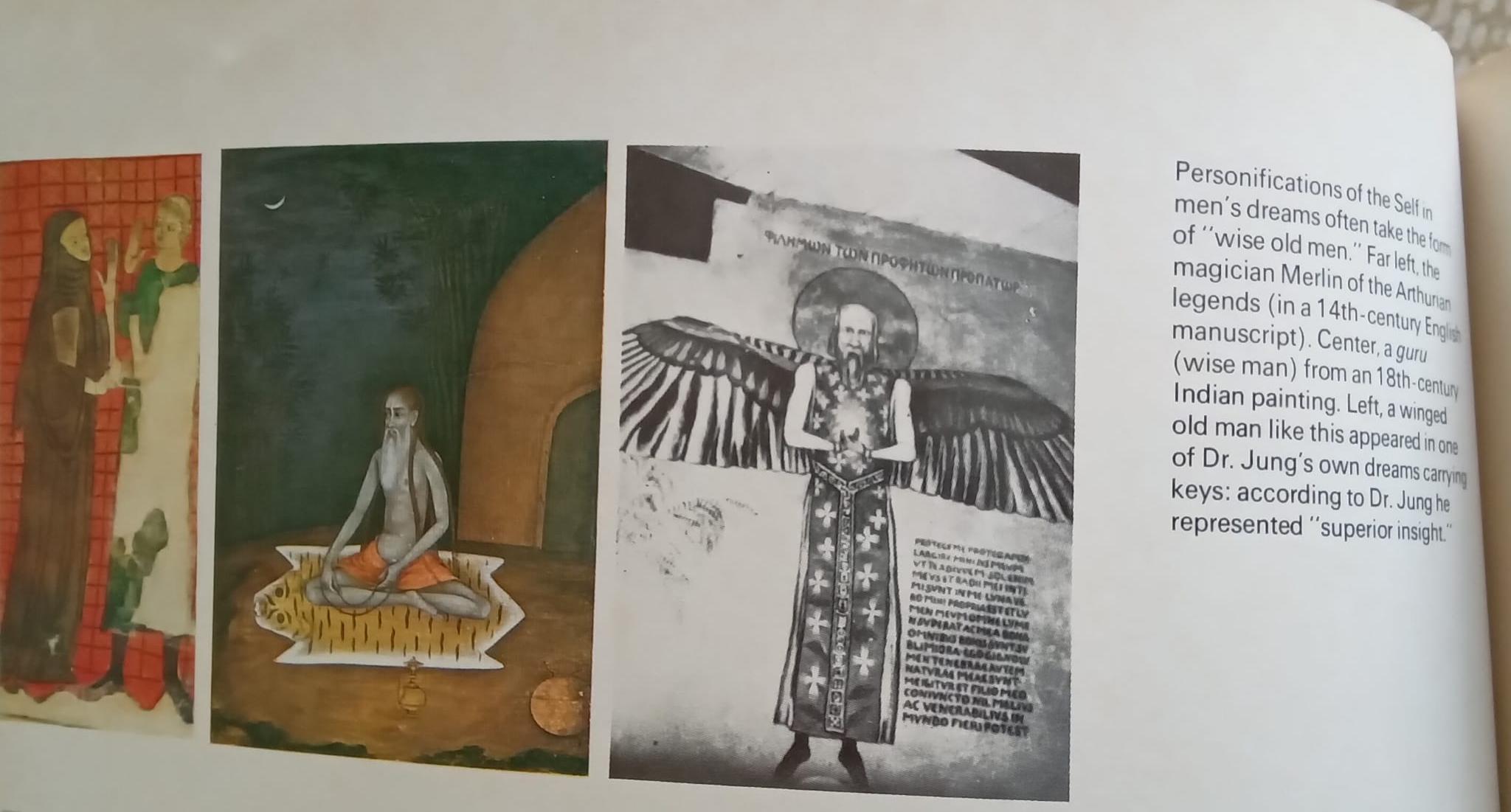
The soul (inner self) and mind has been studied by numerous philosophers and psychologists throughout history but for this essay we will focus on the work of Carl Jung. Carl Jung described the self as the totality of the whole psyche in order to distinguish it from the ego which constitutes only a small part of the psyche – see figure 1

FIGURE 1 – The Self according to Carl Jung (Von Franz, M.L 1976)

The soul or inner centre of the self can also be called the daimon of man. “throughout the ages men have been intuitively aware of such an inner centre. The greeks called it mans inner daimon; in Egypt it was expressed by the concept of the “Ba-soul” and the Romans worshipped it as the “genius” native to each individual” (Von Franz, M. L,1976pp 161) So it can be said that the self that we express when we do things with soul or meraki comes from a spiritual part of ourselves which could be considered to be full of light and wisdom, is older than our physical lives and is comprised of much more than just simply our conscious self or I (ego)

In design work the artists style could be said to come from this part of themselves which is independent of any exterior objects drawn. “The poet and potter M.C. Richards describes the experience of the daimon well when she says, “There lives a creative being inside all of us and we must get out of its way for it will give us no peace unless we do.” (Jungian centre for spiritual sciences, 2023)

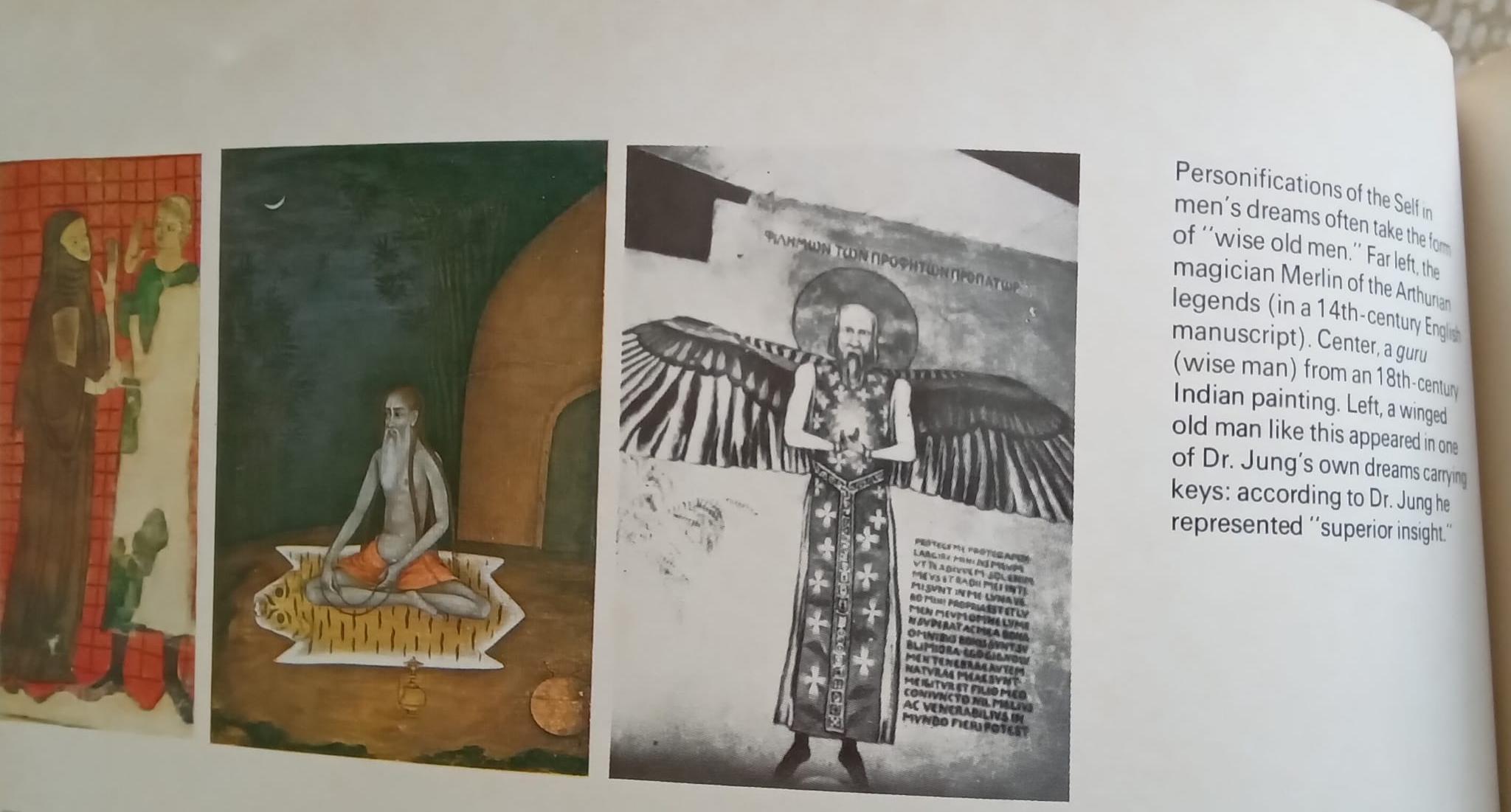
Carl Jung fully explored the psyche and his daimon or genius which he felt could be represented by archetypes such as the wise old man in his artwork (see figure 2) and his work in his Red and Black books are invaluable to explore the sort of images which come from the depths of the soul.

FIGURE 2 – The wise old man Archetype as a personification of the Self.

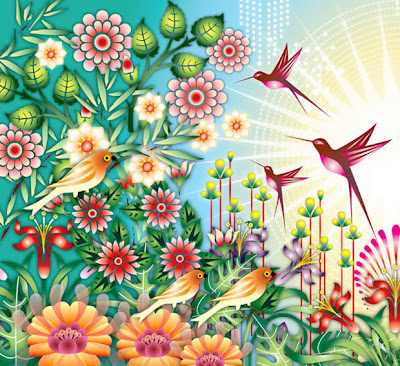
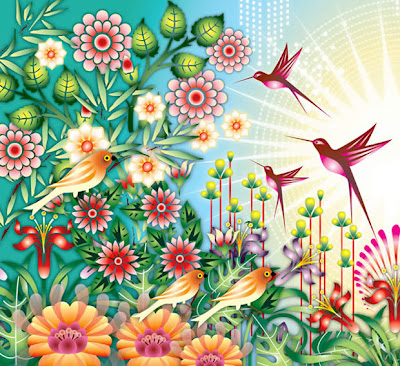
Carl Jung is not the only pioneer to explore the inner self or soul in their art and design work. Modern artists and designers such as Catalina Estrada, Alena Hennesey and Laura Hollick use the soul for inspiration in their work choosing images in their designs which has come from the free expression of the soul so the artwork is done with Meraki. Catalina Estrada runs a design course on an online platform called Domestika called “Patterns with Soul” and in this course she explains how she gets her images using the expressive imagery from children’s poetry. These children have expressed their inner spiritual self or soul in their poetry which is done with meraki and this is used to design Catalina Estradas designs which she also does with meraki . (figure 3)

Figure 3 – An example of Caralina Estrada’s soulful designs

WISDOM

The second word we will be exploring is Wisdom. The Oxford English Dictionary, 2012 defines wisdom as “the quality of having experience, knowledge and good judgement 2 the body of knowledge and experience that develops within a society or period”. In design wisdom is different to knowledge or information, its not just having the right information or knowledge to complete our design work but having the right application and wise insight on how to apply the knowledge effectively to the greater benefit of the designer, the world and those we design for,

Design itself can be thought of as “the wise regulation of dynamic elements such as flow, integration, awareness, and value.(J. Woods, 2023) So wisdom is essential to design but there raises “the question as to whether wisdom can ever be transferred, therefore whether it can viably be represented as ‘data’ or ‘information” (J.Woods, 2023) Wisdom comes from experience but if we want to be wise before we become old we can start by emulating the wise, finding someone with good judgement and discernment in their design work and becoming inspired by their work.

To design with wisdom, not simply knowledge would be to design for the highest good of all and is linked with virtue. “In looking for a North Star to guide practice, I’d like to offer the old Greek term eudaemonia . In its original and ancient context, it was an ethical and political notion to refer to the highest human good and often linked with the ideas of virtue and practical wisdom” (Dalladay-Simpson, J, 2022. pp 42) So to be wise in design would be to be ethical and to benefit humanity in some way.

For guidance, we can also look at the wisdom traditions around the world where known wise leaders have written down their insights and good judgements for the benefit of mankind and incorporate their wisdoms into our designs. Indigenous wisdom includes insights from observing and working with nature over many generations. Being curious about our world and seeing through different cultural lenses, wisdom can be gleaned for artistic inspiration. Some wisdom traditions to learn from include such gems as the japanese asthetic of wabi sabi of finding beauty in imperfection, which allows us to embrace our imperfections and the imperfections of the world and find the beauty in it. Of if we were experimenting with light and shadow and need to come to terms with the shadows in our world we can find much in the wisdom traditions in praise of light but we may too wish to explore some of the worlds wisdom around shadows which can be found in books like “In Praise of Shadows by Junichiro Tanizaki. Artworks designed and made with cultural wisdom are often more innovative and can help illuminate the minds of the viewers to different perspectives to their own, helping to enhance the wisdom, insight and better judgement of humanity leading to more prosperous lives for all.

It may not just be people we can choose to emulate for wise design but nature also. Nature has many wise designs in it having gone through billions of years of evolution- where errors in design and bad judgements have been discarded by natural selection. By looking at the designs in nature we can better see what works for our own designs, this is the wisdom of bio-mimicry. There are many examples of successful design from bio-mimicry such as the design of Velcro which “was invented by George de Mestral in 1941 and was inspired by the burrs he found on himself and on his dog. Being an engineer and entrepreneur, Mr. de Mestral examined the burr under a microscope and realized the small hooks of the burr and loops of the fur/fabric allowed the burr to adhere exceedingly well. This sparked his idea to mimic the structure as a potential fastener” (Micro Photonics, 2020)

This principle of learning from the wisdom of nature can be used to apply to modern design of the world especially sustainable design. Natures wisdom being used in sustainable design can be seen in the Cardboard to Cavier Project by Graham Wiles where it was observed in nature that one organisms waste products are another organisms fuel or food found in complex ecosystems. This was applied to a fish restaurants cardboard waste which was recycled to be used as horse bedding, which was in turn collected and used as compost for worms and then these worms were in turn fed to sturgeon which produce cavier for the fish restaurant. This leads to zero waste and a sustainable and prosperous future through the wise design of our waste systems via bio mimicry. (cited by Pawlyn, M, 2011)

Wisdom then comes from curiosity, keen observation and insight, mimicking the wise or with experience, coupled with an ability think critically about knowledge, to then design with courage, to make something new and innovative that benefits the world. It comes from being in right relationship with ourselves and the natural world around us. Knowledge and information can only take us so far where how to best apply it comes from within as a creative leap from knowledge to practical wisdom

JOY

The last word to explore is Joy. Joy is defined as “an emotion of great pleasure or happiness” (Oxford English Dictionary, 2012) This emotion is especially important in design as this is a feeling that would be wonderful to evoke when a design is viewed and would be especially important for commercial success as a designer. Design which made people feel happier, healthier and therefore more productive would undoubtedly sell well and lead to greater harmony in society. So the question is how can joy be evoked in viewers and what kind of elements would a design need to include to bring about feelings of happiness and joy? This question was asked by Ingred Fetell Lee who is a design consultant and one of the leading speaker and writer about the power of joy. In her book Joyful she documented what she called the aesthetics of joy which include the following:

“Energy – Vibrant colour and light

Abundance- lushness, multiplicity and variety

Freedom – nature, wildness, and open space

Harmony – balance, symmetry and flow

Play – circles; spheres and bubbly forms

Surprise – contrast and whimsy

Transcendence – elevation and lightness

Magic – invisible forces and illusions

Celebration- synchrony, sparkle and bursting shapes

Renewal – blossomin, expansion and curves”

(Fetell Lee, I, 2018)

Joy is important not just in our pursuit of happiness in pleasure but because it relates to wisdom and virtue, more as eudaimonia In ancient Greek, the word for the highest degree of human happiness is eudaimonia,(Gilbert E, 2016) This is the joy not related to hedonism where joy is found simply in consuming things but in wise living and practical tasks such as making our environment clean and decluttered. Marie Kondo, the organisation expert talks of the sparkling joy of decluttering, where her KonMarie Method describes decluttering everything in the environment and only keeping minimal items which are meaningful and bring you greater joy creating a happy home environment.

Joy can be described as an inner state which is mirrored in the world around us, either the joy in the environment sparks a change within us or the joy within us is mirrored in the world in joyful design. “External conditions mirror internal conditions, so straightening your room settles internal disorder” affirms authors Charlene Belitz and Meg Lundstrom in, The Power of Flow: Practical Ways to Transform Your Life with Meaningful Coincidence.” (Cited in Fahkry 2018)

Inrid Fetell Lee in her book Joyful, 2018, pp 13 – 14 describes how Joyful design in the environment can inspire greater or wiser actions in people. She mentions the instance of a town which to all accounts was dead and grey and rife with crime but when the mayor started to paint the buildings joyful bright colours an inner change was brought to the towns inhabitants and they felt safer and paid their taxes and people started to care for the town better since the inclusion of joyful design. Joyful design helps people live happier, healthier lives and can make drab depressing or cluttered environments more inclusive to health. If all doctors surgeries and hospitals and educational establishments were designed with joy in mind, then real benefits may be harnessed for the people who used these environments on a regular basis.

To link the three words Meraki, Wisdom and Happiness we can see both wisdom and happiness are a state of the soul or true self and a way of being called Eudaemonia. “It “is a key concept in ancient Greek ethical and political philosophy…eudaimonic well-being insights from the Greek wisdom tradition equates well-being with living a virtuous life; that is, a life lived in accordance with four cardinal virtues – wisdom, justice, moderation, and courage.”(Dhiman, S 2021) ) The etymology of this word being Eu meaning good and daimon or genius. To have meraki wise joyful design is to have an eudaemonic design and this can come from within, while being influenced by and being in right attitude with our environment and world. It stems from a state of flow and having a curiosity about our inner lives and the natural world, learning practical wisdom and virtue from them which leads to joy and benefits the world. To this end, for a final project question I would like to further research,”How can we create Eudaimonic design as ethical designers for a better world?

REFERENCES

IMAGES

Figure 1 – Psyche according to Jung – Jung, C.G. and Franz, M.-L.von (1976) Man and his symbols. New York, NY: Doubleday & Co. pp 161

Figure 2 Wise old Man Archetype as symbol of self Jung, C.G. and Franz, M.-L.von (1976) Man and his symbols. New York, NY: Doubleday & Co. pp 198

Figure 3 Catalina Estradas designs (2023) Colorfull illustrations of Catalina Estrada. Available at: http://coralicon.blogspot.com/2009/11/mimo-tego-ze-ze-o-ilustracjach-tej.html (Accessed: April 26, 2023).

Biomimicry – the burr and the invention of Velcro (2021) Micro Photonics. Available at: https://www.microphotonics.com/biomimicry-burr-invention-velcro/ (Accessed: April 26, 2023).

Cross, N (2006) Designerly Ways of Knowing London.Springer-Verlag Limited Available at: 1 (springer.com) (Accessed: April 26,2023)

Csikszentmihalyi, M. (2008) Flow The psychology of optimal experience. New York, NY: Harper Perennial Modern Classics.

Dhiman, S. (2021) “Being good and being happy: Eudaimonic well-being insights from socrates, Plato, and Aristotle,” The Palgrave Handbook of Workplace Well-Being, pp. 3–32. Available at: https://doi.org/10.1007/978-3-030-30025-8_1.

Dictionary definition & meaning (no date) Dictionary.com. Dictionary.com. Available at: https://www.dictionary.com/browse/dictionary (Accessed: April 26, 2023).

Fahkry, T. (2020) Why life is a mirror reflecting your inner world, Medium. Mission.org. Available at: https://medium.com/the-mission/why-life-is-a-mirror-reflecting-your-inner-world-a7ad344be6c0 (Accessed: April 26, 2023).

Gilbert, E. (2016) Big magic- Creative Living Beyond Fear. London, London: Bloomsbury

Hennesey, A. (2023) Art becomes you – Soul Painting, alena hennessy. Available at: https://www.alenahennessy.com/ (Accessed: April 26, 2023).

Hollick,L at TEDxHamilton (2014) You are the art YouTube. Available at: https://www.youtube.com/watch?v=nSJDvLxi2Rc (Accessed: April 26, 2023)

Jungian Center for the Spiritual Sciences (2015) In the grip of the daimon. Available at: https://jungiancenter.org/in-the-grip-of-the-daimon/ (Accessed: April 26, 2023).

Jung, C.G. and Franz, M.-L.von (1976) Man and his symbols. New York, NY: Doubleday & Co.

Jung, C.G. (1977) The archetypes and the collective unconscious: Transl. by r.f.c.hull. Princeton, NJ: Princeton University Press.

Lee, I.F. (2021) Joyful: The surprising power of ordinary things to create extraordinary happiness. New York, NY: Little, Brown Spark.

Lee, I.F. (2018) Where joy hides and how to find it, Ingrid Fetell Lee: Where joy hides and how to find it | TED Talk. Available at: https://www.ted.com/talks/ingrid_fetell_lee_where_joy_hides_and_how_to_find_it (Accessed: April 26, 2023).

Pawlyn,M (2011) Using nature’s genius in architecture (2011) YouTube. YouTube. Available at: https://www.youtube.com/watch?v=3QZp6smeSQA (Accessed: April 26, 2023).

Proverbs 20:27 – The spirit of Man (no date) Bible Hub (Holy Bible). Available at: https://biblehub.com/proverbs/20-27.htm (Accessed: April 26, 2023).

Mukundananda, S. (no date) Bhagavad Gita, the song of god, Bhagavad Gita, The Song of God – Swami Mukundananda. Jagadguru Kripaluji Yog, USA. Available at: https://www.holy-bhagavad-gita.org/ (Accessed: April 26, 2023).

Simpson, J.A. (2012) The oxford english dictionary. Oxford, Englans: Oxford University Press.

Stein, M. and Arzt, T. (2020) Jung’s Red Book for Our Time Searching for soul under postmodern conditions. Asheville: Chiron Publications.

Tanizaki, J. (1977) In praise of shadows. New Haven, CT: Leete’s Island.

Uribe, C.E. (2023) Online course – illustration for patterns with soul , Domestika. Available at: https://www.domestika.org/en/courses/1266-illustration-for-patterns-with-soul (Accessed: April 26, 2023).

What does meraki mean? (2021) The Word Counter. Available at: https://thewordcounter.com/meaning-of-meraki/#:~:text=What%20does%20the%20word%20meraki,into%20whatever%20you%20are%20going. (Accessed: April 26, 2023).

Wood,J(2002) Metadesigning Designing in the Anthropocene,Taylor & Francis Group, . ProQuest Ebook Central, http://ebookcentral.proquest.com/lib/trinity/detail.action?docID=6955538. Accessed 23/04/23:23

Woods, J. (no date) The wisdom of nature = the nature of wisdom; – ub.edu. Available at: http://www.ub.edu/5ead/PDF/8/Wood.pdf (Accessed: May 8, 2023).


Our Collective Dreams Create the Future

With the news being as bleak as ever with even more wars and collective disasters hitting the world. It can be easy to turn a blind eye to all this and just switch off the news while increasingly living in your own safe bubble at home, work and study. We may be spurred into action in different ways by taking part in protests at the collective insanity of our politicians and corporations but also I feel we are called to dream a better future for ourselves and the world.

In Shamanic cultures they have a concept of dreaming the world into being, it could be said we are all living in a collective dream and we all collectively dream or create the world we experience. So what we dream is pretty important. So what do we dream? Many people are dreaming of more money, a better job, better life experiences, holidays etc. Some of the more religious amoung us are dreaming according to the dictates of their religion, perhaps where a saviour fixes the world for us and saves the day by returning and creating a new world some day, some are dreaming of a spiritual world which we can escape to when we die. Still others are caught in the collective dark spell of the media spin, and dream whatever we see on our screens, whatever we are fed as news on current affairs. This all seems so passive and is very much dictated to by others. Many people have handed over the power of our collective dreaming to someone else, the religions, the politicians, the journalists and so on

However this handing over of our dreams to the dictates and spells of others is disempowering and very much leads us into victim consciousness as the collective dreams dictated by the powerful few are often quite negative. So like the shamans who dream their world into being every day through art, song, poetry, dancing and ritual, maybe we are meant to do something similar.

We can take charge of our collective dreaming by imprinting the universe with our own frequency of what we would like to see and dream in humanity – these dreams and visions of a better future can help transport us over disaster both personally and collectively. If we all starting dreaming something great for ourselves and the world every day thats beautiful meaningful, a world where life wins, love wins, and benefit is given to the many not just the few then what a world it would be

It all starts with IMAGINATION and imagining the world or our lives different to the way it currently it is, then creating our vision in some way through creative means, then when we have seen how wonderful it is – starting to put this vision into action.

The negative spells of the mass media can no longer touch us when we are collectively creating a beautiful world rather than just passively reacting to the latest drama we are given. The negative experiences can be seen as opportunities to grow as people in different directions rather than just a bad experience, and then we can all grow and create together – a life that is both beautful and meaningful and well worth living.

So what are you dreaming? Because this dream helps shape the future for all of us.

Collective dreaming

Dreaming of a better way and a new world is my vision

where reality and imagination make a harmonious collision

The ashes of a dark night has gathered around

A collective nightmare we have created and found

But its in our dreaming wonder power 

To create a new future from seed to flowerI

ts starts with asking what have we have chosen to believe?

In religions and media sorcery is what we are meant to serve

To the world who just wants to grow and thrive

In responsibility – are we doing whats right or do we dive   

 Into gruesome shadows – where is our spiritual gold?

That we can release on the earth in exchange not sold

For the heavy energy and negative spells

Collective transformation one by one to dwell

In harmony and recopticity, not separation and hate

But love and understanding and compassion a better fate

For all the world for you and me

Let it be so and blessed be

Consciousness, The chakana, the shamanic directions and the tree of life

Consciousness is a mystery and puzzle which has yet to be solved but ancient peoples always worked for it for healing and to harmonise ourselves and our world.

For the Quero people (descendants on the Inka) they have a structure of consciousness which is represented by the Chakana. If you examine a Chakana it has 4 compass points like a cross with steps between each direction. The points on the compass represent the 4 main stages of consciousness and the steps in-between represent the three worlds.

So to take a full journey around the chakana is to go through all the stages of consciousness and also overcome the 3 worlds (lower middle and upper worlds)


In India these stages of Consciousness are also represented by Brahma in that he has 4 heads in the four directions and the sound OM is said to encompass all 4 directions, leading a person from material duality and physical consciousness to full spiritual awareness.


The 4 stages of consciousness can be described in how we handle life when each stage

For instance the first stage of consciousness is symbolised by the serpent Sachamama and this is where appears that life is happening to you or for you. This is also known as victim consciousness and it can seem life is a struggle there are many obstacles and you may feel victimised by your circumstances. In This is classed as the sleeping state, there’s been no great spiritual awakening and the person is fully situated in physical life. Also in terms of the duality of material consciousness its very black and white – good is definitely good and evil is definitely evil. This is a consciousness of judgements and victimising each other – Im good you are evil, or Im evil and you are good etc – a consiousness of shame and blame. The work and healing to be done in this stage of consciousness is to illuminate and release past stories and heal the victim, recognising yourself in the “other” including those who may have hurt us in the past as aspects of our own shadow.


The second stage of consciousness is symbolised by the Jaguar, Otorongo and in this stage of consciousness we are no longer simply victims of circumstances, but we actually become overcomers and life begins to be created by me. This direction is in the West, In this stage of consciousness we become something of a spiritual warrior – facing our fears and raising above our circumstances, this stage is about doing shadow work and facing our own inner darkness both inwardly and in the world at large. This stage of consciousness could be classed as the dreaming state and we begin to co create or dream our world into being, we may dream when we are awake in this stage and have visions. In terms of duality, then although life is created by me this is still very much a battle, good vs evil both within ourselves and in the world. In the western tradition Mercurius is also any ally for the shadow work required in this stage and he shapeshifts and takes different forms depending on our blindspots and what we need to face in ourselves. The healing required in this direction includes past life work.

The third stage of consciousness’s ally is the hummingbird or Sewarkenti of the North – in this stage of consiousness life is created through me. So this is where we have a lot more joy and happiness and we play with reality a lot more. We have faced and illuminated our shadows and we recognise ourself in the other. In terms of duality this is no longer good versus evil but more a dance between lovers like the ying yang or the concept of Yanantin. Both sides need each other and the duality in this world is not seen as an obstacle but as a great opportunity to grow and learn and even dance. This stage of consiousness we can said to be awake. Reality is shaped through our joyful expression and we can see through many illusions.

The fourth stage of consiousness for the East is symbolised by the Eagle also known as Haton Upachin. This is the consiousness where Oneness is experienced. I am God are One – I am also one with all the rest of existance. This is not a consiousness of seperation but of unity. This stage of consiousness is also a bliss state, it can be called Samadhi or ecstatic union with the Cosmos. In terms of duality – then in this stage the role of good and evil is fully understood and the big picture is seen from a birds eye perspective where duality is now just a pattern on the floor that can work in yours and humanities favour from either side because both are encompassed within us as indeed the whole universe.

In the centre of the Chakana beyond the 4 directions and three worlds is the birthing point of Consciousness – the meeting point between Great Spirit and the material universe. This seed of consciousness or creation is situated within us.


It can be said the journey around the 4 directions is a tree of life because it helps us overcome the miseries of material existence, suffering and the difficulties of living in a world of duality. It also leads to eternal life. There are many ways to go through the 4 directions, these can include following Christs teachings (but not the church religion), yoga such as nada yoga, shamanism such as shamanic directions by Clare Juliette and psychedelic shamanism as taught by Andrew Camargo which deals with the shamanic archetype being an universal concept describing things how they are from a spiritual perspective and are not tied to one particular culture but is something that belongs to us all the links are below.


Shamanic Directions Clare Julliette https://shamanicdirections.com/

My earlier article on Christ and the stages of consciousness https://contentedbumblebee.com/2023/02/23/the-stages-of-consciousness-and-christs-journey/
School of Modern Soul Science Andrew Camargo https://www.youtube.com/@theschoolofmodernsoulscience
Nada Yoga https://himalayanacademyofsound.com/nada-yoga-course-online

Lockdown Art – Prayer Flags

In the Uk we are well into our lockdown by a couple of weeks. If you are like me then you may have been using this time to be more creative, do healing soul work, write poetry or take some courses in something you always wanted to learn

If you have a stack of paintings and drawings you have made during this time of crisis then this is beautiful and brilliant memento of being able to stay calm and collected during a world crisis and difficult time for everyone

So this could make a great book for your drawings or paintings OR

another thing we could do with this work once the lock down is over is turn them into coloured prayer flags as a memento of the pandemic of 2020 to hang in your home once all this is over.

So this is some of the art I have been making during this time.


20200405_164201_20200405164527730

20200328_115526

spring1

The idea is to keep collecting these positive uplifting images with the intention of peace and harmony to ALL during this time and beyond and then going to the print shop once this is all over – printing them postcard size and transfering the images onto silky fabric using a product like image maker

If you wanted to make the prayer flags fancy you could even stich into them or add details like beads and then threading them onto a chord to hang as prayer flags from this time in quarantine

A bit like these prayer flags


prayer flags 014

You could even add bells or tassels to the bottom and it would make a wonderful memento of this time in history of the pandemic of 2020 as well as showing off the creative work from this time.

Happy creating 🙂

UK LOCKDOWN – Planting seeds of Light

seedsWell its day 4 of the lockdown in the UK for the Coronovirus Crisis

I am living in a shared building with our own rooms and shared kitchens and thankfully so far nobody here has got the virus

I have been busy keeping my gratitude journal during this time noting three things every day that Im grateful for to counteract the often anxiety making news

Today I am grateful for the financial security not just for myself but for most people I know with the government paying sick pay and 80% of the wages for both the employed and the self employed. I am so grateful for having somewhere safe to live during this time with plenty to do, courses internet and art and even gardening. I live within walking distance of the sea so when I go for my permitted walk per day i can walk on the sea front within safe social distance of everyone else.

thankyou


I am hoping that others are finding the crisis equally as comfortable and if your only issue is anxiety and fearing for the future I can help with that

A lot of this battle is not physical but is literally in our hearts and minds . Mindfulness helps with this to be fully present during this time is not putting anyone in danger but is ensuring that we can have the best life and best response to danger and adversity

There are also little tricks and activities which can be done not to pretend that there is no concern but to remain positive during even a lockdown.

One of which is try and nurture life – so much of our world is about buying and consuming which is essentially eating and taking constantly in a hungry basis – but some of what we do should also be about nurturing and giving life and joy to someone else, difficult when your on a social distance – you may do this in your work if your service based but it can be good to cultivate this life in your own sphere and environment as well.

One simple way to do this can be to plant some seeds – so while there is a focus on illness fear death dying and calamity in the media and on the news you can have a plant or two growing on your windowsill that you grew and cultivated and brought to life yourself

This plant or even tree can be symbolic of the light life and joy that you bring forth into your own life and into the world as opposed to just consuming and taking. The seeds you plant of harmony in the world as opposed to the turmoil.

In the UK M and S are even giving away free seeds with plenty of ideas on how to plant them and repot the plants and herbs https://www.marksandspencer.com/c/food-to-order/little-garden

There is also a wonderful meditation of hebrew chanting which is perfect to plant more love and joy into the world by Rabbi Shefa Gold

Or zarua laTzadik, u’l’yishray lev simcha
Planting Seeds of Joy and Light Hebrew text
Plant the seeds of Joy and Light; Tend them carefully day and night,
In this soil so dark and deep, I plant the dreams that Love will reap

Planting Seeds of Joy and Light: Or zarua

The singing or chanting is a beautiful intention to sooth any worries and fears and to begin planting a good fruit to harvest later in the year both physically and spiritually once this lockdown and crisis is over.

Also beyond, simple things you can do is notice the beauty of the sky or the trees or the sunshine – share your bread with the birds, bake or cook something delicious and cultivate light joy beauty into present awareness to grow like seeds.


DURING THESE TIMES…….shamanic archetype emerging

celtic treeI haven’t written anything for some time and now I find that I am forced to pause and reflect since we are in the middle of a Coronovirus pandemic which means everyone must stay indoors as much as possible and away from crowds.
What have I been doing during this time – well I have been healing myself mentally and emotionally from whatever ails me, my wounds and shadows. Learning about Jungian psychology and the shamanic archetype which emerges during times like these to guide us through a crisis

Whats the shamanic archetype I hear you ask – well, its an archetype with clusters of facets which aid people in difficult times and comes to the fore building character when times get tough.

It has many facets which include the sacred clown (humor during tough times) the artist (art and creativity and colour to brighten difficult times) sacred musician (the musician) but also things like the witch, the priest, the magician, the trickster, the hero and so many others

If you feel any of these facets relate to you and your expression for getting through a crisis such as an ill health or an economic depression, or anything really, difficult relationships abuse, trauma then you may want to look at a course called the SHAMANIC WORKBOOK hosted by somebody called Andrew Carmago who runs the School of Modern Soul Science who can help people to navigate what happens psychologically during tough times and when this shamanic archetype emerges and can cause issues if not dealt with properly. https://theschoolofmodernsoulscience.teachable.com/

I have discovered my own expression of the shamanic archeype which emerged for me when I went through a health crisis and a difficult relationship and other real life traumas – include the artist, the sacred singer, the poet and the trickster, the technican of dream time and the dancer – there more and these facets overlap – but these are some  the facets of the shamanic archetype that emerged for me to guide me through crisis or just life in general.

You have to be careful that the shadow self doesn’t emerge and cause more of an issue or you get stuck in survival modes but there has been a great emergence of the shamanic archetype during these times and I guess its only going to get more prevalent as there appear to always be plenty of crisis for people to navigate and overcome.

For me my shamanic archetype has appeared as a tree of life as I meditate on life and the seed of life when everything seems to be going to death and decay. Spring time is a wonderful time for this mediation and Im going to embrace my shamanic calling and plant some seeds now during this crisis to honour life and I can watch something grow while everything is in turmoil.

For the last few years with a crisis in my health I have been training for times like these – if you want some ideas on how to navigate these personal crisis while we are all stuck at home then heres a list I came up with.

GET CREATIVE – find a positive healing expression you can spend your time doing instead of constantly staring at screens and panicking.  You can still check the news but it doesn’t have to be constant. It could be art making, card making, water colours (there are many free classes online and in books) My personal favouritie is Tamara laporte and she does a a Life book lessons with some free classes to get started to see if you get on with her style https://www.willowing.org/

GET THE BODY MOVING – during times like these its easy for the body to go into lock down sofa surfing and apathy but this isn’t really desirable – there is loads of great exercise videos you can do from home now during the crisis. Or you could do something called Chakradance meditation which is my personal favourite – basically you have the benefits of free dance and guided meditation as you visualise dancing through forests or crystal caves or round the campfire all in the comfort of your home = perfect for quarantine times. You can find chakradance for the minimum of 10 pounds for some basic dance meditations on daily OM https://www.dailyom.com/cgi-bin/courses/courseoverview.cgi?cid=928  Chakradances main page is here: http://www.chakradance.com/

WORK FROM HOME – theres currently loads of ways to earn a living from home provided you have a phone line and a decent internet connection. Some great ideas to get you started are teaching english as a foreign language – a basic website for this is cambly where you can get paid just to converse in english to people around the world https://www.cambly.com/english?lang=en but there are MANY english language sites. Other ideas could include proofreading, copywriting, data entry and so on Also ARISE does customer service from home https://www.ariseworkfromhome.co.uk/

SING – now may be a great time to start dancing and singing to your favourite songs at home – we saw this in Italy where they had beautiful neigbourly singing together in the street – this could be done in the UK or whatever country your in during a cris – but a personal practise even of just singing in the shower will be great for stress relief and expressing your voice during this time. If you like mantras and chanting i recommend also chanting either poems or affirmations that are personal to you and you have come up with yourself to encourage yourself (maybe repeat them while your doing the hand washing) A GREAT website for hebrew mantras which I love to sing is http://www.rabbishefagold.com/hebrew_chant/

KEEP A GRATITUDE JOURNAL – sometimes we can be overwhelmed by the things that worry us or seem to be going wrong – but theres nothing wrong with focussing on what is going right today here and now as well and it can be a beautiful thing to look back on – you could start a gratitude journal today and your grand-kids could read about what you were grateful for during the pandemic of 2020


Ephemeral Art, Impermanence and the meaning of Life


There is a lot of art”out there” and most leave the tracks and traces of the artist who made them but what happens when the artist deliberately sets out to leave no trace of their art? When it is an ephemeral piece swept up and destroyed by its creator or by the ravages of time itself – the only trace that may remain perhaps in the form of photographs capturing a temporal fleeting moment of beauty and wonder. Perhaps they exist only in the memories of those who saw it for its brief existence and perhaps it’s there as a history of the landscape in which it was formed. It existed for a time, it was here and then it was gone. There is a unique philosophy to the artists who choose to create such fleeting ephemeral works of art and in this essay we will look at the works of three artists in particular who choose to express their art in this short lived way and that is Andy Goldsworthy, Tibetan monks and Ryan Moule.

What story does the art tell from the artist who deliberately chooses to leave no trace except for photographs and memories. There are actually many forms of art by artists who do this everything from simple sand sculptures and beach art to environmental land art to light painting and the ancient intricate colourful sand mandalas of the Tibetan monks.

Firstly looking at Andy Goldsworthy, he is a British sculptor, photographer and environmentalist. He produces site specific sculpture and land art in a natural and urban setting. His work is made from leaves sticks stones ice and all sorts of natural material and is often completely transient in nature.

“Anthony Goldsworthy’s work”

He likes to create something from the energy of the landscape, something with rhythm, like a dance “a lot of my work is like picking potatoes you have to get into the rhythm of it” (Goldsworthy 2009). The philosophy behind his work is all about the dance of life which is fleeting and temporary in nature. Time plays a significant role in his work he creates a piece takes a photograph of it in its prime and then leaves it to the elements to decay destroy and “kill” the artwork leaving nothing permanent behind. To Goldsworthy this is important to understand the reality of birth, life and death.

His artwork also emphasises the connectedness of all things and the connectedness of the art and us to nature and the landscape. It and we are part of the natural world. Time is something that connects us all and the environment in which we live which is temporary and not eternal. His ephemeral artwork leaves no legacy except for photographs and memories but this is living the honesty of life on earth and how eventually even the most indelible mark fades to nothing in the end. Its also about treading lightly on the earth as an environmental measure and leaving only a gentle footprint on a delicate planet.

This concept is also found elsewhere in the world with the Tibetan Buddhist monks and their beautiful temporary sand mandalas

In Tibetan Buddhism they have a teaching on impermanence and how everything on earth in this life is temporary. The idea in Buddhism is to become conscious of this fact and live life well and in accordance with what are the known laws of nature. The teaching can be summed up in the phrase “this too shall pass” which is a jewish folktale where a king commissioned a ring to be made that would make him happy when he was sad and sad when he was happy. He was a wealthy man and money was no object to him, the ring that came back was a simple gold ring with the words “this too shall pass” engraved on it. (see story at the end) Which is the essence of impermanence, nothing lasts forever when you have all the riches and wealth in the world, this will pass when you are having the worst experience in your life this too shall pass and so it is with life itself, this too shall pass and whatever life you have carefully crafted for yourself all your achievements and reached goals will one day pass into old age and death. The Tibetan sand mandala reflects this – it is beautifully made and may even incorporate beautiful images of the inner world deities and archetypes but once it is carefully and beautifully created by an expert monk – it is immediately swept up into grey sand and distributed as a blessing to the local people or put into a stream to distribute the blessings to the whole world. This teaches the Buddhists monks and those who see it the lesson of how to live with impermanence in mind – like a beautiful sand mandala life should be a blessing and carefully constructed a beautiful thing for the world to behold, then it is swept away by death and decay. It teaches that although life is temporary it is ideally still worth striving for and a good life is to create a beautiful piece of art from it to bless the world leaving only photographs and memories behind.

These sentiments are also found and echoed in the ephemeral artworks of photographer Ryan Moule in his talk in November 2016 he mentioned how he realised that one day his photographs could end up in a charity shop somewhere after he had died and how he didn’t really want to see this happen so he decided to create a temporary set of photographs in an exhibition called deviated light showing the decay of buildings as a visual and conceptual analogy for the impermanence of photography. It also raises the question of collective memory and whether things are better remembered after they have been photographed. In his talk Moule was quite philosophical about life and he played an ipad air advert which showed his views about how like the Tibetan sand mandala life is an artwork or poem of a greater collective poem of the whole of life in the universe and we have this moment of life short as it is in the scheme of things is to contribute a verse, so he asks the question what would your verse be? His photography will fade to black eventually but that was his contribution to the great story or poem of life as it rolls ever on. The ipad advert was based on a poem found from the dead poets society

O Me! O Life!

BY WALT WHITMAN

Oh me! Oh life! of the questions of these recurring,

Of the endless trains of the faithless, of cities fill’d with the foolish,

Of myself forever reproaching myself, (for who more foolish than I, and who more faithless?)

Of eyes that vainly crave the light, of the objects mean, of the struggle ever renew’d,

Of the poor results of all, of the plodding and sordid crowds I see around me,

Of the empty and useless years of the rest, with the rest me intertwined,

The question, O me! so sad, recurring—What good amid these, O me, O life?


  Answer.

That you are here—that life exists and identity,

That the powerful play goes on, and you may contribute a verse.


Source:  Poetry Foundation https://www.poetryfoundation.org/poems-and-poets/poems/detail/51568


The common thread of all these artists are they are approaching and expressing what can be an ugly and uncomfortable truth for us all about the temporary nature of life old age and death, in a beautiful and profound way. It makes us think and reflect on this reality and how to best live our lives without shocking us too much. It also makes us think of those who have passed and the contributions they made before they died.  No matter what we do how wise or rich or skilled we become nobody escapes death and when it comes, our body will return to dust leaving only memories to those we leave behind. It helps us appreciate the transient and beautiful nature of life and perhaps makes us value our loved ones or even our enemies that much more because we know they have their time and they too shall be gone like the colourful artworks which leave no real trace behind them.

The King and His ring – jewish folktale

During the festive Passover meal with his ministers, King Solomon teased Benaiah son of Jehoiada, his arrogant Chief of Army.

– “Benaiah, I was told that there is a special ring that has special power. It can change the mood of a person. A sad person becomes happy when watching it and a happy person becomes sad. I know that you of all people in the kingdom can find the ring. Would you be able to find this ring and bring it to me until the eve of Sukkot eve, that is 6 months from now?”

– “If it exists anywhere on earth, your majesty,I will find it and bring it to you”replied Benaiah.

King Solomon smiled as he knew that no such ring existed, but he wanted to give his minister a taste of humility.

Time passed and Benaiah sent soldiers and messengers throughout the kingdom, examined records, consult with elders yet he could not find even a hint of the existence of the magic ring. Spring passed so did summer. The last harvest of the year, and with it the Succoth festival, was approaching. Then came eve of Sukkot day. With only a few hours to go before the deadline, Benaiah was wandering in the streets of Jerusalem. The sun was setting casting a golden light on the city which until today all its buildings are made of stone. All the merchants were busy with the last sale and prepared to close their stalls. In desperation he turned to an old silversmith.

– “Have you by any chance heard of a magic ring that makes the happy person forget his joy and the broken-hearted person forget his sorrows?” asked Benaiah. The silversmith listened carefully and smiled. He took a plain silver ring from his old and dusty box and engrave something on it. When Benaiah read the words on the ring, his face lighted up as he knew he had found the right ring.“This is the ring!” he cried, and gave the poor jeweler all the money in his purse.“Come to the palace and you shall have more,” he added, “for I cannot thank you enough.”

The sun set. The time for the holiday dinner arrived. That night the palace was full of guests ready to celebrate with the king.

– “Well, my friend,” said Solomon, “Have you found a ring that can make a happy man sad and a sad man happy?” Everyone who knew about the search for the impossible ring laughed and Solomon himself smiled.

But to everyone’s surprise, Benaiah held up a ring and declared, “Here it is, your majesty! I found a ring. It has three Hebrew letters engraved on it: Gimel, Zayin, Yud. Then he whispered the meaning of these initials in the king’s ear.

As soon as Solomon heard the meaning of the inscription, the smile vanished from his face. He looked at the guests filling the banquet hall, the tables covered with shining serving pieces, silver goblets, and the finest food one can find. Tears rolled down his eyes. He felt sad. The entire hall was in total silence. A ring that makes the king cry?

Then King Solomon looked at the ring again and started to smile again then laughed so hard infecting the entire palace with giggles and laughter. Everyone wanted to know the meaning of the initials.

The King revealed to his guests what was written on the ring: “The three letters are ג,ז,י represented three words: Gam Zeh Ya’avor”. It means in English: “This too shall pass.”


In life everything is temporary. In fact, life itself is temporary. In between birth to death we all experience the roller-coaster of life.

King Solomon had everything – power, women and wealth then he realized at the end of his life the illusion to hold on to things as they are not the source of happiness. So he turned to a spiritual search and wrote in Ecclesiastes :

” The words of the Teacher,son of David, king in Jerusalem: “Meaningless! Meaningless!” says the Teacher. “Utterly meaningless! Everything is meaningless.” … “What has been will be again,what has been done will be done again; there is nothing new under the sun.”


Source: https://www.linkedin.com/pulse/20141021084324-7280985-the-king-and-the-ring-this-too-shall-pass


Above All Else Guard Your Heart

English: Scroll of the Book of Proverbs

English: Scroll of the Book of Proverbs (Photo credit: Wikipedia)

The book of proverbs is all about Wisdom. God is concerned that we acquire some wisdom both to better know Him but to also keep us safe and free us from trials and traps.  God compares His dear flock to sheep but this does not mean His sheep should be mindless.  Jesus instructs His disciples to be as wise as serpents but as as harmless as doves.

Wisdom will save you from the ways of wicked men,from men whose words are perverse, who have left the straight paths to walk in dark ways, who delight in doing wrong and rejoice in the perverseness of evil, whose paths are crooked and who are devious in their ways

Wisdom will also save you also from the adulterous woman, from the wayward woman with her seductive words,surely her house leads down to death and her paths to the spirits of the dead.

Blessed are those who find wisdom those who gain understanding, for she is more profitable than silver
and yields better returns than gold. She is more precious than rubies; nothing you desire can compare with her. Long life is in her right hand; in her left hand are riches and honor.Her ways are pleasant ways, and all her paths are peace. She is a tree of life to those who take hold of her;those who hold her fast will be blessed

Proverbs

But what wisdom may we gain from reading a book that is at least 2000 years old? – the Bible is full of sound advice and timeless wisdom thats still relevant and helpful today you can find everything in there from relationship advice, to how to best deal with politcians or wise counsel about debts and money matters, but if there was one key important thing to note, what might it be? In the Book of Proverbs God says

ABOVE ALL ELSE Guard your heart for everything you do flows from it.

Love is the most important thing to God, before he looks at anything else He examines the heart – He loves us with an unfailing love, He does not change nor does His love, it is us that changed, we fell, we got entangled and destructively ensnared in the duality of good and bad deeds, sin, the fruit of the tree of knowledge that separated us from God but He was always there.

In life, He instructs us, we need to guard our hearts, nurture and protect our love. He wishes that love and faithfulness would never leave us; bind them around your neck, write them on the tablet of your heart.  Perfect love casts out all fear. People with cold stone hearts create a cold and cruel world and their deeds become evil even with the best logic behind them or otherwise brilliant scientific or scriptural understanding. Everything we do flows from love or the state of our hearts.
If I speak in the tongues of men or of angels, but do not have love, I am only a resounding gong or a clanging cymbal. (1 Cor 13)

Religious teachers throughout the world may demonstrate perfect clarity in their understanding on the Law and hold masters degrees in it, but where they lack love then they will do the opposite of what love demands. This is where people are stoned to death for adultery or other crimes, perfectly right by the law books, but love and compassion says no there is none without sin to take the stone and the one without sin would not do it. There are cruel and barbaric religious wars, hate crimes, terrorism  mutilations  tortures, beatings countless murders all done in the name of religion. The scriptural justification is underlined in triplicate in the Holy Books – its totally right and justified in law somehow somewhere, but would love do it? Love, understanding wisdom mercy forgiveness and compassion is what God demands from His disciples. Jesus says – Go and learn what this means: ‘I desire mercy, not sacrifice For I have not come to call the righteous, but sinners.” God does not care about good or bad deeds.  He takes care of sin or bad deeds, but no good deed will get you into heaven what He wants and requires is love.

what does love look like, the Bible describes in detail what love does:
Love is patient, love is kind. It does not envy, it does not boast, it is not proud. Love does not dishonor others, it is not self-seeking, it is not easily angered, it keeps no record of wrongs Love does not delight in evil but rejoices with the truth. It always protects, always trusts, always hopes, always perseveres

If we have love we have all these qualities we easily forgive others, indeed see nothing to forgives and keep no record of wrongs, it always protects, so if you love others there would be no question of  killing them or even subjecting non believers to heavy penalties even if the law demands it, love doesnt allow it. Love always hopes – so the law may demand people go to hell for eternity even but love hopes the best for every sinner great or small. Love does not condemn thy neighbour nor even judge.

“Teacher, which is the greatest commandment in the Law?”

Jesus replied: “‘Love the Lord your God with all your heart and with all your soul and with all your mind.’ This is the first and greatest commandment. And the second is like it: ‘Love your neighbor as yourself. All the Law and the Prophets hang on these two commandments.

If you love God you want to follow His commands and lead a life pleasing to God and if you love your neighbor as yourself you wouldn’t murder them (thou shalt not kill) or steal from them (thou shalt not covet your neighbors goods) so you would automatically follow the whole law and commands of God just by focusing on the command to love – which comes from guarding your heart and cultivating the qualities above every day and weaving it into all you do. Empathy placing yourself in the shoes of others even praying for an “adversary”

God heals the broken hearted, love is one of the gifts of the Holy Spirit it can be restored for without Love then all things we do are affected. Without love you may be following the law like a long list of chores and still getting it wrong, wheras someone with love would follow them easily and be unable to do things against the law because love simply wouldnt allow it.

Love then and compasssion, not the law or trying to avoid every single sin which is impossible to do, should always be our highest goal. Not only that it should be part of everything we do “in everything strive to love” It is Gods urgent command, to love Him as much as He loves you and love others with the same Love He pours out on the world it is the fufillment of the Law