Creating with Meraki, Wisdom and Joy – Eudaimonic Design

In this essay three words will be presented the words are Meraki, Wisdom and Joy, I will then discuss how these words can join together to lead to a further research question to explore in my final year project.

MERAKI

The first word I am going to discuss the word Meraki. “According to NPRUrban Dictionary, and Darling Magazine, the word meraki (pronunciation: merak-kee) is a Greek adjective that describes doing something with soul, creativity, love and passion. The Modern Greeks describe this as putting yourself into whatever you are going” (Miller, K, 2021) The word is not directly translatable into English bur can be described as doing something with the essence of yourself or soul and leaving an impression of yourself in the work. This can apply to anything, such as organising a home, looking after a restaurant but when it applies to the arts and creative endevours such as art, poetry or design it is especially poignant. In the arts we can do things with passion and soul when we create putting our whole selves into the work. When artwork is done with meraki it could be argued the contents or fhe self or soul of the artist and their innermost passions and dreams are reflected in the artwork.

To produce art with meraki is to operate from the place of optimal experience or as M. Csikezentmihalyi, 1990 explains, as flow. “When a person is able to organize his or her consciousness so as to experience flow as often as possible their quality of life is going to improve”

In design work produced with meraki the guiding light of the artwork is the inner self or soul. Which leads us to discuss the nature of the soul. The Bible describes the soul as “The spirit of man is the candle of the Lord.—The spirit of man, breathed into him at first by the Creator (Genesis 2:7), and afterwards quickened and illumined by the Divine Spirit, is the “candle of the Lord,” given to man as an inward light and guide”(Proverbs 20:27) In eastern philosophy the soul is known as “Atma” and it too is full of light consciousness and bliss (Sat Chit Ananda) For the soul there is neither birth nor death at any time. He has not come into being, does not come into being, and will not come into being. He is unborn, eternal, ever-existing and primeval. He is not slain when the body is slain.” (Bhagavad Gita 2.20)

If one was going to approach the question on what is the self or soul

that is reflected in the artwork from a more scientific perspective, one may look to Psychology. Psychology was originally the study of the soul – as the word Psyche which is in the words etymology comes from “Classical Mythology. a personification of the soul, which in the form of a beautiful girl was loved by Eros” (dictionary.com,2023) which is now in modern times more commonly thought of as the totality of mind self conscious and unconscious and -ology as the study of.

The soul (inner self) and mind has been studied by numerous philosophers and psychologists throughout history but for this essay we will focus on the work of Carl Jung. Carl Jung described the self as the totality of the whole psyche in order to distinguish it from the ego which constitutes only a small part of the psyche – see figure 1

FIGURE 1 – The Self according to Carl Jung (Von Franz, M.L 1976)

The soul or inner centre of the self can also be called the daimon of man. “throughout the ages men have been intuitively aware of such an inner centre. The greeks called it mans inner daimon; in Egypt it was expressed by the concept of the “Ba-soul” and the Romans worshipped it as the “genius” native to each individual” (Von Franz, M. L,1976pp 161) So it can be said that the self that we express when we do things with soul or meraki comes from a spiritual part of ourselves which could be considered to be full of light and wisdom, is older than our physical lives and is comprised of much more than just simply our conscious self or I (ego)

In design work the artists style could be said to come from this part of themselves which is independent of any exterior objects drawn. “The poet and potter M.C. Richards describes the experience of the daimon well when she says, “There lives a creative being inside all of us and we must get out of its way for it will give us no peace unless we do.” (Jungian centre for spiritual sciences, 2023)

Carl Jung fully explored the psyche and his daimon or genius which he felt could be represented by archetypes such as the wise old man in his artwork (see figure 2) and his work in his Red and Black books are invaluable to explore the sort of images which come from the depths of the soul.
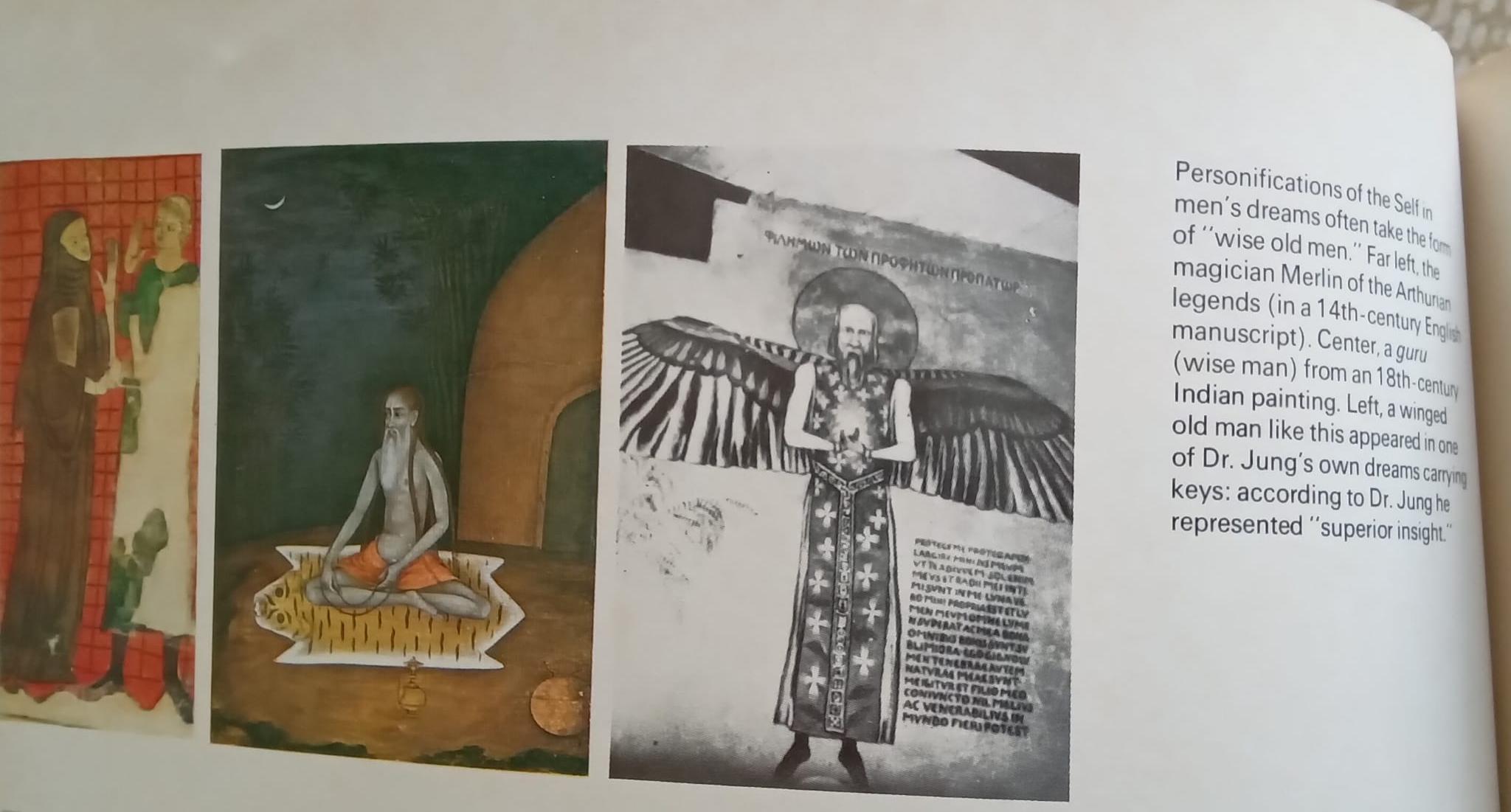
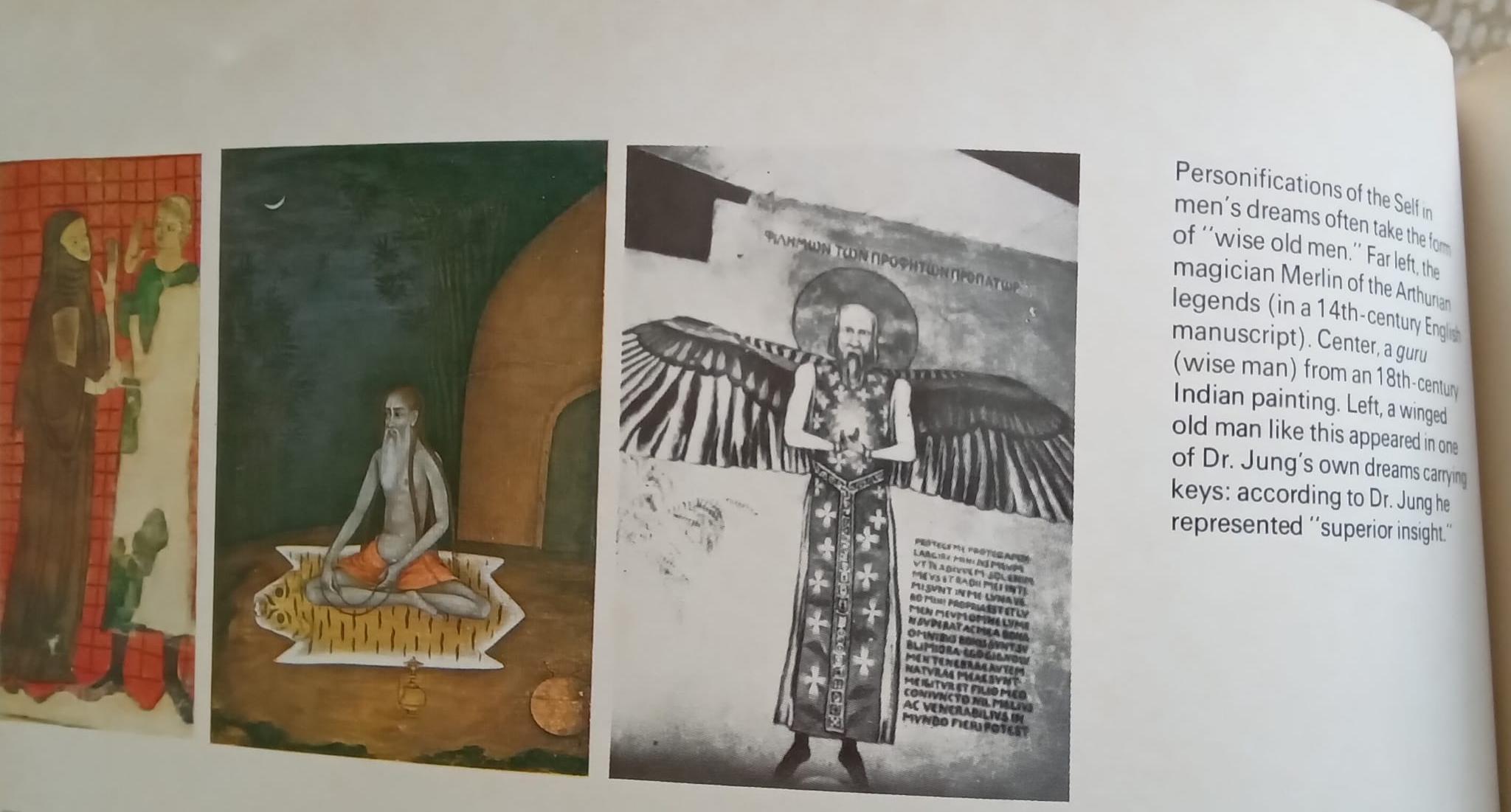
FIGURE 2 – The wise old man Archetype as a personification of the Self.

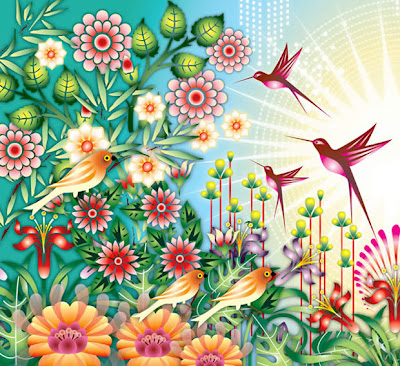
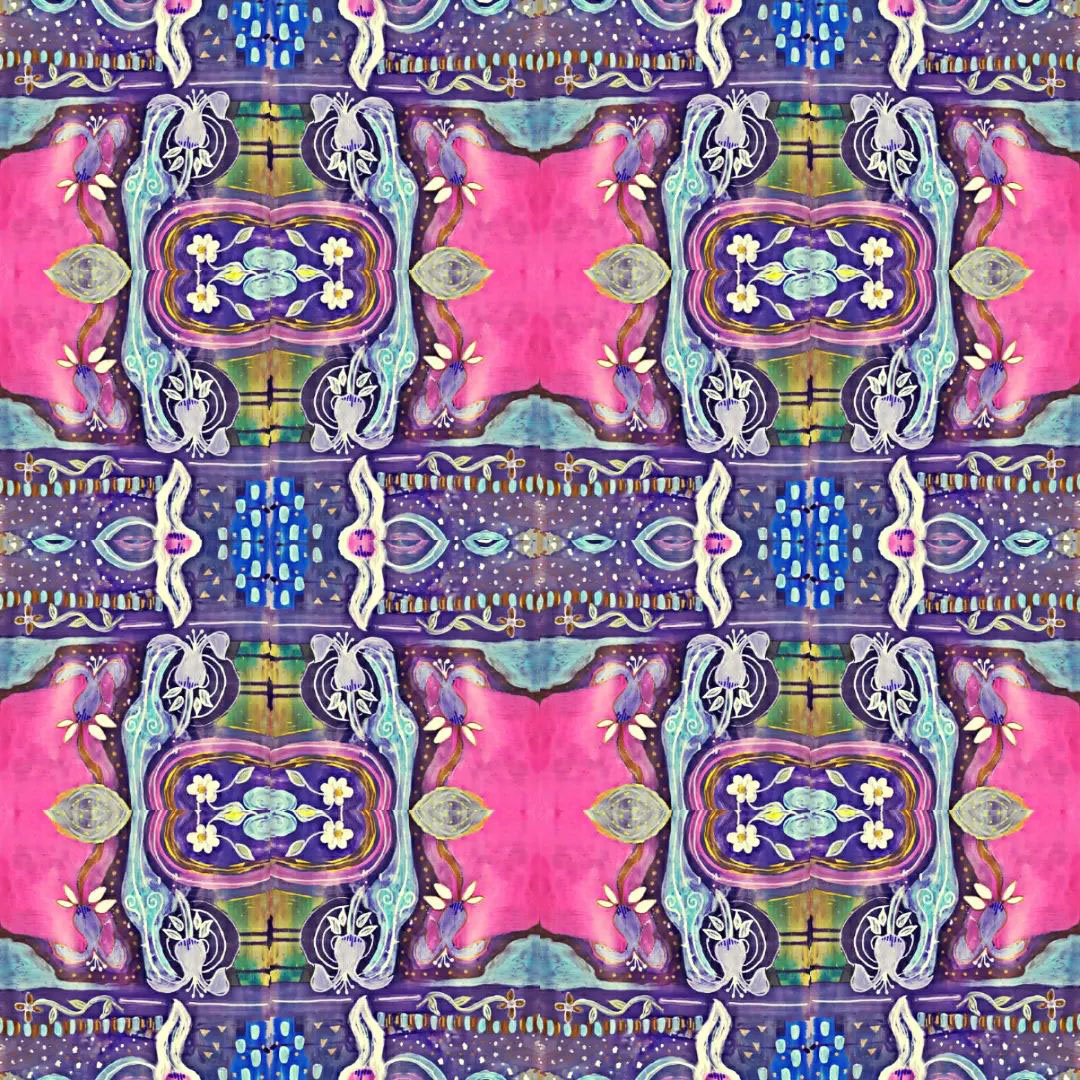
Carl Jung is not the only pioneer to explore the inner self or soul in their art and design work. Modern artists and designers such as Catalina Estrada, Alena Hennesey and Laura Hollick use the soul for inspiration in their work choosing images in their designs which has come from the free expression of the soul so the artwork is done with Meraki. Catalina Estrada runs a design course on an online platform called Domestika called “Patterns with Soul” and in this course she explains how she gets her images using the expressive imagery from children’s poetry. These children have expressed their inner spiritual self or soul in their poetry which is done with meraki and this is used to design Catalina Estradas designs which she also does with meraki . (figure 3)
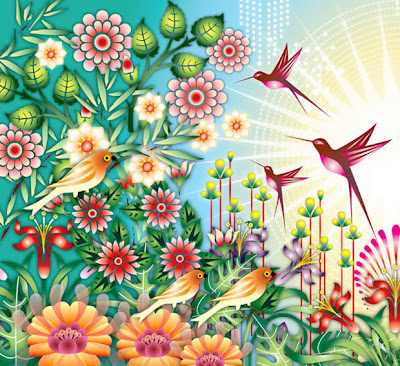
Figure 3 – An example of Caralina Estrada’s soulful designs

WISDOM

The second word we will be exploring is Wisdom. The Oxford English Dictionary, 2012 defines wisdom as “the quality of having experience, knowledge and good judgement 2 the body of knowledge and experience that develops within a society or period”. In design wisdom is different to knowledge or information, its not just having the right information or knowledge to complete our design work but having the right application and wise insight on how to apply the knowledge effectively to the greater benefit of the designer, the world and those we design for,

Design itself can be thought of as “the wise regulation of dynamic elements such as flow, integration, awareness, and value.(J. Woods, 2023) So wisdom is essential to design but there raises “the question as to whether wisdom can ever be transferred, therefore whether it can viably be represented as ‘data’ or ‘information” (J.Woods, 2023) Wisdom comes from experience but if we want to be wise before we become old we can start by emulating the wise, finding someone with good judgement and discernment in their design work and becoming inspired by their work.

To design with wisdom, not simply knowledge would be to design for the highest good of all and is linked with virtue. “In looking for a North Star to guide practice, I’d like to offer the old Greek term eudaemonia . In its original and ancient context, it was an ethical and political notion to refer to the highest human good and often linked with the ideas of virtue and practical wisdom” (Dalladay-Simpson, J, 2022. pp 42) So to be wise in design would be to be ethical and to benefit humanity in some way.

For guidance, we can also look at the wisdom traditions around the world where known wise leaders have written down their insights and good judgements for the benefit of mankind and incorporate their wisdoms into our designs. Indigenous wisdom includes insights from observing and working with nature over many generations. Being curious about our world and seeing through different cultural lenses, wisdom can be gleaned for artistic inspiration. Some wisdom traditions to learn from include such gems as the japanese asthetic of wabi sabi of finding beauty in imperfection, which allows us to embrace our imperfections and the imperfections of the world and find the beauty in it. Of if we were experimenting with light and shadow and need to come to terms with the shadows in our world we can find much in the wisdom traditions in praise of light but we may too wish to explore some of the worlds wisdom around shadows which can be found in books like “In Praise of Shadows by Junichiro Tanizaki. Artworks designed and made with cultural wisdom are often more innovative and can help illuminate the minds of the viewers to different perspectives to their own, helping to enhance the wisdom, insight and better judgement of humanity leading to more prosperous lives for all.

It may not just be people we can choose to emulate for wise design but nature also. Nature has many wise designs in it having gone through billions of years of evolution- where errors in design and bad judgements have been discarded by natural selection. By looking at the designs in nature we can better see what works for our own designs, this is the wisdom of bio-mimicry. There are many examples of successful design from bio-mimicry such as the design of Velcro which “was invented by George de Mestral in 1941 and was inspired by the burrs he found on himself and on his dog. Being an engineer and entrepreneur, Mr. de Mestral examined the burr under a microscope and realized the small hooks of the burr and loops of the fur/fabric allowed the burr to adhere exceedingly well. This sparked his idea to mimic the structure as a potential fastener” (Micro Photonics, 2020)

This principle of learning from the wisdom of nature can be used to apply to modern design of the world especially sustainable design. Natures wisdom being used in sustainable design can be seen in the Cardboard to Cavier Project by Graham Wiles where it was observed in nature that one organisms waste products are another organisms fuel or food found in complex ecosystems. This was applied to a fish restaurants cardboard waste which was recycled to be used as horse bedding, which was in turn collected and used as compost for worms and then these worms were in turn fed to sturgeon which produce cavier for the fish restaurant. This leads to zero waste and a sustainable and prosperous future through the wise design of our waste systems via bio mimicry. (cited by Pawlyn, M, 2011)

Wisdom then comes from curiosity, keen observation and insight, mimicking the wise or with experience, coupled with an ability think critically about knowledge, to then design with courage, to make something new and innovative that benefits the world. It comes from being in right relationship with ourselves and the natural world around us. Knowledge and information can only take us so far where how to best apply it comes from within as a creative leap from knowledge to practical wisdom

JOY

The last word to explore is Joy. Joy is defined as “an emotion of great pleasure or happiness” (Oxford English Dictionary, 2012) This emotion is especially important in design as this is a feeling that would be wonderful to evoke when a design is viewed and would be especially important for commercial success as a designer. Design which made people feel happier, healthier and therefore more productive would undoubtedly sell well and lead to greater harmony in society. So the question is how can joy be evoked in viewers and what kind of elements would a design need to include to bring about feelings of happiness and joy? This question was asked by Ingred Fetell Lee who is a design consultant and one of the leading speaker and writer about the power of joy. In her book Joyful she documented what she called the aesthetics of joy which include the following:

“Energy – Vibrant colour and light

Abundance- lushness, multiplicity and variety

Freedom – nature, wildness, and open space

Harmony – balance, symmetry and flow

Play – circles; spheres and bubbly forms

Surprise – contrast and whimsy

Transcendence – elevation and lightness

Magic – invisible forces and illusions

Celebration- synchrony, sparkle and bursting shapes

Renewal – blossomin, expansion and curves”

(Fetell Lee, I, 2018)

Joy is important not just in our pursuit of happiness in pleasure but because it relates to wisdom and virtue, more as eudaimonia In ancient Greek, the word for the highest degree of human happiness is eudaimonia,(Gilbert E, 2016) This is the joy not related to hedonism where joy is found simply in consuming things but in wise living and practical tasks such as making our environment clean and decluttered. Marie Kondo, the organisation expert talks of the sparkling joy of decluttering, where her KonMarie Method describes decluttering everything in the environment and only keeping minimal items which are meaningful and bring you greater joy creating a happy home environment.

Joy can be described as an inner state which is mirrored in the world around us, either the joy in the environment sparks a change within us or the joy within us is mirrored in the world in joyful design. “External conditions mirror internal conditions, so straightening your room settles internal disorder” affirms authors Charlene Belitz and Meg Lundstrom in, The Power of Flow: Practical Ways to Transform Your Life with Meaningful Coincidence.” (Cited in Fahkry 2018)

Inrid Fetell Lee in her book Joyful, 2018, pp 13 – 14 describes how Joyful design in the environment can inspire greater or wiser actions in people. She mentions the instance of a town which to all accounts was dead and grey and rife with crime but when the mayor started to paint the buildings joyful bright colours an inner change was brought to the towns inhabitants and they felt safer and paid their taxes and people started to care for the town better since the inclusion of joyful design. Joyful design helps people live happier, healthier lives and can make drab depressing or cluttered environments more inclusive to health. If all doctors surgeries and hospitals and educational establishments were designed with joy in mind, then real benefits may be harnessed for the people who used these environments on a regular basis.

To link the three words Meraki, Wisdom and Happiness we can see both wisdom and happiness are a state of the soul or true self and a way of being called Eudaemonia. “It “is a key concept in ancient Greek ethical and political philosophy…eudaimonic well-being insights from the Greek wisdom tradition equates well-being with living a virtuous life; that is, a life lived in accordance with four cardinal virtues – wisdom, justice, moderation, and courage.”(Dhiman, S 2021) ) The etymology of this word being Eu meaning good and daimon or genius. To have meraki wise joyful design is to have an eudaemonic design and this can come from within, while being influenced by and being in right attitude with our environment and world. It stems from a state of flow and having a curiosity about our inner lives and the natural world, learning practical wisdom and virtue from them which leads to joy and benefits the world. To this end, for a final project question I would like to further research,”How can we create Eudaimonic design as ethical designers for a better world?

REFERENCES

IMAGES

Figure 1 – Psyche according to Jung – Jung, C.G. and Franz, M.-L.von (1976) Man and his symbols. New York, NY: Doubleday & Co. pp 161

Figure 2 Wise old Man Archetype as symbol of self Jung, C.G. and Franz, M.-L.von (1976) Man and his symbols. New York, NY: Doubleday & Co. pp 198

Figure 3 Catalina Estradas designs (2023) Colorfull illustrations of Catalina Estrada. Available at: http://coralicon.blogspot.com/2009/11/mimo-tego-ze-ze-o-ilustracjach-tej.html (Accessed: April 26, 2023).

Biomimicry – the burr and the invention of Velcro (2021) Micro Photonics. Available at: https://www.microphotonics.com/biomimicry-burr-invention-velcro/ (Accessed: April 26, 2023).

Cross, N (2006) Designerly Ways of Knowing London.Springer-Verlag Limited Available at: 1 (springer.com) (Accessed: April 26,2023)

Csikszentmihalyi, M. (2008) Flow The psychology of optimal experience. New York, NY: Harper Perennial Modern Classics.

Dhiman, S. (2021) “Being good and being happy: Eudaimonic well-being insights from socrates, Plato, and Aristotle,” The Palgrave Handbook of Workplace Well-Being, pp. 3–32. Available at: https://doi.org/10.1007/978-3-030-30025-8_1.

Dictionary definition & meaning (no date) Dictionary.com. Dictionary.com. Available at: https://www.dictionary.com/browse/dictionary (Accessed: April 26, 2023).

Fahkry, T. (2020) Why life is a mirror reflecting your inner world, Medium. Mission.org. Available at: https://medium.com/the-mission/why-life-is-a-mirror-reflecting-your-inner-world-a7ad344be6c0 (Accessed: April 26, 2023).

Gilbert, E. (2016) Big magic- Creative Living Beyond Fear. London, London: Bloomsbury

Hennesey, A. (2023) Art becomes you – Soul Painting, alena hennessy. Available at: https://www.alenahennessy.com/ (Accessed: April 26, 2023).

Hollick,L at TEDxHamilton (2014) You are the art YouTube. Available at: https://www.youtube.com/watch?v=nSJDvLxi2Rc (Accessed: April 26, 2023)

Jungian Center for the Spiritual Sciences (2015) In the grip of the daimon. Available at: https://jungiancenter.org/in-the-grip-of-the-daimon/ (Accessed: April 26, 2023).

Jung, C.G. and Franz, M.-L.von (1976) Man and his symbols. New York, NY: Doubleday & Co.

Jung, C.G. (1977) The archetypes and the collective unconscious: Transl. by r.f.c.hull. Princeton, NJ: Princeton University Press.

Lee, I.F. (2021) Joyful: The surprising power of ordinary things to create extraordinary happiness. New York, NY: Little, Brown Spark.

Lee, I.F. (2018) Where joy hides and how to find it, Ingrid Fetell Lee: Where joy hides and how to find it | TED Talk. Available at: https://www.ted.com/talks/ingrid_fetell_lee_where_joy_hides_and_how_to_find_it (Accessed: April 26, 2023).

Pawlyn,M (2011) Using nature’s genius in architecture (2011) YouTube. YouTube. Available at: https://www.youtube.com/watch?v=3QZp6smeSQA (Accessed: April 26, 2023).

Proverbs 20:27 – The spirit of Man (no date) Bible Hub (Holy Bible). Available at: https://biblehub.com/proverbs/20-27.htm (Accessed: April 26, 2023).

Mukundananda, S. (no date) Bhagavad Gita, the song of god, Bhagavad Gita, The Song of God – Swami Mukundananda. Jagadguru Kripaluji Yog, USA. Available at: https://www.holy-bhagavad-gita.org/ (Accessed: April 26, 2023).

Simpson, J.A. (2012) The oxford english dictionary. Oxford, Englans: Oxford University Press.

Stein, M. and Arzt, T. (2020) Jung’s Red Book for Our Time Searching for soul under postmodern conditions. Asheville: Chiron Publications.

Tanizaki, J. (1977) In praise of shadows. New Haven, CT: Leete’s Island.

Uribe, C.E. (2023) Online course – illustration for patterns with soul , Domestika. Available at: https://www.domestika.org/en/courses/1266-illustration-for-patterns-with-soul (Accessed: April 26, 2023).

What does meraki mean? (2021) The Word Counter. Available at: https://thewordcounter.com/meaning-of-meraki/#:~:text=What%20does%20the%20word%20meraki,into%20whatever%20you%20are%20going. (Accessed: April 26, 2023).

Wood,J(2002) Metadesigning Designing in the Anthropocene,Taylor & Francis Group, . ProQuest Ebook Central, http://ebookcentral.proquest.com/lib/trinity/detail.action?docID=6955538. Accessed 23/04/23:23

Woods, J. (no date) The wisdom of nature = the nature of wisdom; – ub.edu. Available at: http://www.ub.edu/5ead/PDF/8/Wood.pdf (Accessed: May 8, 2023).


The Mystery of Creativity and Innovation

Creativity is a beautiful and amazing thing. So many people really love and admire true creativity when it becomes responsible for an amazing piece of art or a new innovative design, technology, fashion, books or a new product.

However, not everyone finds it easy to accept the new, when the new comes along. Often if a culture is not ready for it, it can be shunned, labeled, locked away, hidden or otherwise removed from society as an aberration.  Sometimes in the case of technology, we have to wait for the infrastructure to change to accommodate the new as often networks of all kinds remain outdated. An easy example of this would be the fax machine – a really common item may be a bit outdated now but most offices do contain the fax machine somewhere – but when was it invented? it was actually invented in 1843 well before it was needed or could be accepted by the culture and also because it needed new infrastructure. Education too always takes a long time to catch, you may not know it but our education system is often hopelessly outdated and often fails to prepare people for jobs in a fast-paced changing world. New jobs become available and exist due to the rate of change and innovation, that nobody is equipped to fill because training hasn’t caught up.

So what skills can we learn in the modern world that would be useful in these times? Creativity could be one such skill. What is creativity? its often considered a little bit mystical a mysterious force that brings an idea from the ether into solid reality as something new. Creativity could be considered thinking outside the box or its ideas that have value.

Creativity is used to fuel innovation which is something that’s really important in these times of transitions and change in all aspects of society and in the ways we evaluate what we think we know about the world.

You may not know it but theres different types of innovation

Theres sustainable innovation which is looking at ways we can care for and sustain our planet

Service innovation – which is innovation around services

Experience innovation – which is all about providing an experience, for instance, Apple produced a product with a  specifically designed a box that was slow to open to provide the ultimate anticipation experience upon receiving and opening the product. This innovation can be anything to do with the user experience in a variety of different ways.

Then there’s my favorite, impossible innovation this is innovation that is way ahead for its time that seems impossible such as the moon landing initially was years ago something that seems impossible now, but actually, it may become reality one day.

Creativity and innovation is also really important in our society because it fuels social change. A recent example we could look at on this is the recent amount of technological innovation which has caused mass changes in our society now everyone has a phone which has changed peoples habits and behavior.   The internet has caused huge changes in the way people do things and continues to do so with new ways now of earning money online and the new easy connectivity around the world that didn’t exist before

So what is innovation? innovation is applied creativity. Creativity, a mystical gift we all have to some degree, applied usefully to create innovation and drive mass culture change. Possibly and potentially world-changing.

Fluidity modernity is a constant flow of innovation that is changing the world every second of every day.

Innovation while being fuel for mass culture change around the globe is also quite lucrative. In the UK alone in 2007, 1.8 billion was spent just on innovation and the generation of interesting ideas.

So the nitty gritty… how do you do it? is creativity and innovation truly so mystical a gift that is for the creative few, out of the grasp of mere mortals. Well not everyone thinks it is, many people think creativity is something we all have and is something we should all be using and if we really utilized it well could potentially bring about some amazing changes in society.

Creativity is all about divergent thinking.. that’s our out of the box thinking. So how do you do that? Many people claim to not be able to see the box let alone think outside of it – but is that really totally true.

A really easy process and an example would be – just think of all the uses for something like a pencil.

You may think ok – you can draw or write with a pencil so these would be the ordinary every day uses for a pencil but then if you decided to think a bit more creatively you may think well really what else could you do with it – you could use it to put your hair up its wooden and burns so it could be used to start a fire it could be used to make holes in the ground for seeds a weapon chewing erasing.

So this is a really good start in our creative brainstorming – but then what happens if we add something else to the equation.

Didnt mention the size of the pencil or the material

so what could we do with the pencil now – build a house a rocket ship  titanium pencil used to sculpt, edible pencil

So what happens when we say it doesn’t have to function as a pencil

ok so now we get new possibilities – its a ruler, chopsticks, fidget spinner table leg tree support.

But then when we get truly divergent thinking – we may actually have to totally suspend our ideas of reality and what we think the world and the pencil should look like in reality to get something new.

So how could we do that? well an example would be to take the pencil to a totally fantastical place and imagine its uses there

For example – lets take the pencil to the land of harry potter – so if harry potter was going to use the pencil in his land – what would he use the pencil for?  In this example, we can begin to suspend reality and begin to think in ways that are not totally logical or linear to produce new results.

Examples could be as a wand as a mind-reading device, for recording dreams, records conversations, write spells, mind reading pencil, or you could use a giant pencil instead of a broom to fly with, in the game Quidditch

So there we have come up with quite a few ideas that are a little bit out of the box that could potentially become something new one day.

Creativity and innovation is not out of the reach of everyone –  maybe if we all applied a little creativity magic to our lives we could you come up with some amazing ideas to change your life, live with interest and colour and variety, and inspire the lives of those around you.

This blog post has been inspired by the talk by Josh Hart who used meditation and spiritual pracices to fuel innovation and design – given in the Tech hub, 3rd May 2018

JOSH HART
“The Mystery Behind Creativity and Innovation”

This is an interactive talk unpacking the mystery behind the nature of creativity by delving into the uses of divergent thinking. Cognitive barriers tend to prevent creativity being accessed whenever a person wants, there are structures and tools you can use to overcome this problem, to give yourself step by step innovative thinking, whenever you need it.

Josh Hart VA, author of Phenomenological Design. He has an MA in Design Futures. He is a Designer and Director of Mindfulness Design. “I am a multidisciplinary designer with a keen passion for design and mindfulness. I thrive off creative challenges and collaborative experiences.”

Mindfulness Design is a new company, based in Cardiff that promotes innovation and mindfulness within a business

A Mental Health System With Soul?

The social issue we are going to explore in this essay is the role of the mental health system in Wales in managing people with mental health conditions. There is a mental health crisis in the western world especially the UK, where according to Mind, a UK based mental health charity 1 in 4 people will experience a mental health condition of some kind each year in the UK. Other crisis’s which has effected the UK population such as pandemics, economic crisis and climate concerns as well as increased reliance on technology and divorce from the natural world has only added to the number of people experiencing mental ill health. The mental health system is meant to be a healthcare safety net for people experiencing mental ill health to manage and care for their needs while their unwell. However there is an increasing body of people known as psychiatric survivors who all feel they have experienced something of a human rights abuse in the way they were treated by the mental health system and its reliance on compliance to psychiatric drugs

The mental health system is an allopoietic system in that it has a purpose. “Allopoiesis is the process whereby a system produces something other than the system itself.” (online dictionary, 2022)

The mental health system is a subpart of the general health system and its purpose could be defined as a system which helps manage individuals mental health crisis’s, nurse a person suffering from mental ill health back to healthy functioning and look after the health and social needs of those deemed unwell. If its purpose is to restore health, why then are there so many people with mental health conditions simply taken out of the pool of societies workers, awarded social security benefits and are left to struggle at home with their conditions without receiving the proper care and support they need, or worse are abused by the system, losing homes, family members and dignity.

“ The least obvious part of the system, its function or purpose, is often the most crucial determinant of the system’s behaviour.” (Meadows, D H 2008 p. 16)

So the purpose of the mental health system needs to evaluated and understood and if its purpose is to provide a health service, then real discussion is needed on how effective it is at achieving the health goals of its clients.

There are many stories which can be listened to from psychiatric survivors of mistreatment by the modern mental health system from people in all strata’s of society, from notable celebrities like Frank Bruno to You Tube celebrities like Lauren Kennedy who runs a popular channel called “Living well with Schizophrenia” and produces videos on all aspects of mental health including forced medication and being excluded from society. I propose that due to a growing number of stories, as well as several movements of psychiatric survivors from those who have been vocal about their treatment by a system that is meant to heal them, not including those who feel too unwell or unable to complain, that the mental health system needs a redesign. For the purpose of this essay I will be exploring human centred or user experience design and systems thinking, ecolinguisitcs and craftivism when considering how I could contribute to the redesign of the mental health system over the future course of my design career.

Design thinking is an exciting new paradigm for dealing with complex problems including environmental, political or social issues. It is an optimistic positive approach using design methods to look at a problem and its solutions in a new way. User experience and design empathy is important in design thinking as it often look at a problem from a users perspective.

“Human-centred design and design thinking have become popularised over the past 20 years largely to improve a company’s creative innovation potential— as well as the bottom line” (Kelley and Kelley 2013 cited by Jones, H 2022) and is useful not only for commercial enterprises but also for designing around social issues and systems.

I have a mental health condition which I am told requires lifelong treatment so I will likely be working with the mental health system over the next few years of my design career and I hope to play an active role in the way the service is delivered not only to myself but to others also by highlighting the issues and providing feedback to the service providers and volunteering for mental health charities who press for change. I can also use my art and design work to participate in craftivism, Craftivism or activism through craft to tackle social injustice is the way of the peaceful warrior in creating arts, crafts and designs which press for cultural change. I exhibit art in my local area with an artists group called the “Last Foundation” and I can use the exhibitions to highlight the concerns in the mental health system and showcase the work and talents of people with mental health conditions.

When looking at the design of the mental health system its worth noting that there,s been a paradigm shift in design thinking itself in recent years when designing for the greater good in things like health services, education systems or charities and that shift is based around who does the designing. In the past it was just the stakeholders who did the designing employing specially trained designers, but now we are looking at scenarios in service design, where everyone does the designing and innovation is everyone’s responsibility.

To have a fully human centred design of the mental health system the design of it would need to be done not only by isolated trained experts, but by those who are on the front line of the services, people such as mental health nurses, social workers and even the service users themselves.

“That same kind of revolutionary shift is under way today in innovation. Innovation I, the old paradigm, looks a lot like quality assurance. It is isolated in experts and senior leaders, decoupled from
the everyday work of the organization….. we are seeing the emergence of Innovation II, the democratizing of innovation. In this world, we
are all responsible for innovation. Even the term itself has a new meaning. Innovation isn’t only—or
even mostly—about big breakthroughs; it is about improving value for the stakeholders we serve. And
everybody in an organization has a role to play” (Liedtka, J, Salzman,R, Azer, D 2017)

If I as active participant in its innovation was going to redesign the mental health system using design thinking I would certainly need to utilise design empathy and to get to know the clients, or the users of the system from the inside out and design for these clients foremost, I would also draw on my own experience of the system which has at times been less than human. “In moving ‘beyond designing’ in its current form today, Jones reminds us that we should ‘not forget what is still important— the humanity’” (Jones 2020 cited by Jones,H 2022) especially when designing something for the vulnerable.

This humanity is fundamentally what often seems to be lacking in the current way people with mental health conditions are treated, where illness is not always seen as a very human problem, but something of a materialistic scientific puzzle focussed on biological processes and chemical imbalances in the brain and it is the humanity and empathy with peoples lives, soulful concerns, needs and care which would have to be put foremost in a redesign of a complex health system. A new way of looking at the system from a design thinking perspective specifically addresses this problem

Driving this approach has been an imperative to better understand what users need. The central tenet of human-centred design and design thinking is empathy— putting users first in the design process to create more applicable products and services. This has led to many useful innovations, from redesigning patients’ and medical practitioners’ experiences, to making cycling more accessible (Brown 2008 cited by Jones, H 2022)”

The Hasso Plantar Institute of Design at Stanford first evolved the concept of five phases in design thinkingwhich involvesempathising with the users, defining the problems, ideating and coming up with ideas, immersion or development of these ideas, prototyping or developing these ideas on a grand scale or real life scenario before leading to actually testing these ideas.

While empathising with the users of the mental health system, we need to look at the stories they tell about themselves and their treatment, as well as the stories they are told by their doctors, friends and family and culture and media about their mental illness.

“stories are the secret reservoir of values; change the stories that individuals or nations live by and you change the individuals and nations themselves (Ben Okri, 2018)

This includes looking at the names or labels given to people with mental health conditions, the DSM is the psychiatric bible which contains the names of all the disorders with all the symptoms, but many of these names have loaded meanings or stories attached to them. Renaming the disorders with less stigma attached names with better stories such as schizophrenic being renamed to creative daydreamer may do a lot to change how the illness is perceived and handled.

The whole system has to be taken into account as well as the culture in which the system is placed with all their stories and guiding narratives, competing ideologies and worldviews.

Social systems are the external manifestations of cultural thinking patterns and of profound human needs, emotions, strengths, and weaknesses. Changing them is not as simple as saying “now all change,” or of trusting that he who knows the good shall do the good. (Meadows, D H. 2008.p. 167)

Looking at the stories and cultural thinking patterns which a system is formed by leads us to the study of ecolinguistics.

In essence, ecolinguistics consists of questioning the stories that underpin our current unsustainable civilization, exposing those stories that are clearly not working, that are leading to ecological destruction and/or social injustice, and finding new stories that work better in the conditions of the world that we face. These are not stories in the traditional sense of a narrative, however, but rather discourses, frames, metaphors and, in general, clusters of linguistic features that come together to covey particular worldviews. (Halliday (2001)

Ecolinguistics is not only useful for considering ecological issues but also social issues by examining the stories we live by and make up our world or culture. The redesign has to be considered not only from the perspective of human centred design and looking at the needs of the users and participants in the system with empathy and humanity but also by evaluating the stories and cultural assumptions which cause the system to exist in its current form. The world-views which the designers and operators of the system hold which cause mental health to be treated in the way it is. Is mental health considered purely from a scientific mechanistic perspective for instance?

A paradigm shift in the way the mental health system operated could only occur when the main stories which make up its current functioning, such as the chemical imbalance theory for mental health were effectively challenged and overturned. Service users too would have to be revaluated not just as service users, a sick and disabled “useless” class whos function is to consume psychiatric drugs and use the services but as living breathing human beings with complex issues in their lives and culture which could be contributing to their mental ill health and whom also have unique abilities and talents which can contribute in a meaningful way to society. These service users also cannot be considered in isolation, but as people who are part of the greater whole of society and the natural world.

Paradigms resist change because they are driven by complex vested interests, habits and assumptions that sustain each another and are embedded in the language. Words and metaphors reveal some opportunities but hide others. By identifying ‘unthinkable-possibles’ then ‘re-languaging’ them, we can create ‘future-possibles’.(W, J 2022)

To identify unthinkable possibles we need to look at other cultures and their stories which will be different to ours in the UK on how they imagine people with mental health conditions to be. In some shamanic cultures for example people who exhibit signs which we would say are signs of a mental disorder, indicates

“the birth of a healer,” …Thus, mental disorders are spiritual emergencies, spiritual crises, and need to be regarded as such to aid the healer in being born.

What those in the West view as mental illness, the Dagara people regard as “good news from the other world.” The person going through the crisis has been chosen as a medium for a message to the community that needs to be communicated from the spirit realm” (M P Some, 2012)

In such cultures the person is taken aside and trained potentially becoming a shaman for their society. The article “what a shaman sees in mental hospital” which quoted Malidoma Patrice Somé an elder from the Dagada community of Dano, West Africa popularised this theory and gave people in the west including the mentally ill a new way of seeing their illness. The scientific paradigm doesn’t consider the spiritual or the soul in their mental health care, and the crisis was not in other cultures just something of a chemical imbalance but a real spiritual and existential crisis which needed careful management and treatment with care compassion, humanity, empathy and sharing in community. In their culture a person undergoing such a crisis could come through to the other side with real gifts to share, empowered and strong and with a valid role in their soceity ,wheras in our culture such people are often simply wasted being considered disabled or sick for life.

The stories believed and told about the mentally ill person and what was occuring in their life being very different depending on the culture they belonged to with outcomes being very different depending on the stories that were believed, one leading to the birth of a healer or even a shaman with an important role to fulfil in their culture, the other leading to someone being considered disabled and sick or even useless in society.

A system for mental health would be very different in design depending on the underpinning cultural assumptions or stories that were believed about the people being treated. People are less likely to be abused by the system if the people being treated by the system are viewed differently, not just as broken people who may become a burden but as valuable members of society with something to give and share.

To conclude when contributing to the redesign of the mental health system and a mental health paradigm shift in my own life over the course of my design career. I can look at my circumstances and the circumstances of other people with mental health diagnosis’s with empathy and compassion. I can be an active participant in the innovation of the mental health system by being vocal about my treatment and providing feedback and working with mental health charities. I can utilise the tools of design thinking and human centred design in how I think about the problems people with mental health conditions face and contribute to coming up with better solutions. I can also participate in craftivism and use my art and design work to highlight the issues and showcase the talents of people with mental health conditions and show how we deserve better treatment. I can use ecolinguistics as a tool to re-examine the stories told to myself about mental health by the doctors, medical professionals, media and culture and challenge the assumptions or ideologies these stories are based upon to ensure I receive better treatment and care. I can reinvent myself using language stories and positive labels to tell my own stories to myself about my struggles and role in society. I can view myself not as a broken person but as an artist and designer and creative daydreamer who has been through a life changing transformative experience which has given me a unique insight into the systems we work with in the UK and the world-views and myths which govern our lives. There are millions of people with mental health conditions in the UK undergoing similar experiences and can all push for change with the right tools and insights. I can use my gifts of being a creative daydreamer to access the royal road of the unconscious and dream into being new paradigms, new stories and ways of being for our culture and society which is inclusive of all people including those deemed disabled or mentally ill and see life through a different lens.

REFERENCES

Corbett, S.P. (2017) How to be a craftivist: The art of gentle protest. London: Unbound.

Dam, R.F. (2022) The 5 stages in the design thinking process, The Interaction Design Foundation. Interaction Design Foundation. Available at: https://www.interaction-design.org/literature/article/5-stages-in-the-design-thinking-process (Accessed: December 11, 2022).

Ecolinguistics (2022) Stories We Live By. Available at: https://www.storiesweliveby.org.uk/ (Accessed: December 11, 2022).

Halliday, M. (2001) New ways of meaning: the challenge to applied linguistics. In Alwin Fill and Peter Mühlhäusler (eds) The ecolinguistics reader. London: Continuum

Kennedy, L. (2020) My experience with forced medication, YouTube. YouTube. Available at: https://www.youtube.com/watch?v=vejAlrkRue8 (Accessed: December 11, 2022).

Liedtka, J., Azer, D. and Salzman, R. (2018 )Design thinking for the greater good innovation in the Social Sector. New York: Columbia Business School Publishing.

Midgley, M. (2014) Myths we live by. Taylor & Francis Ltd.

Meadows, D. (2008) Thinking in Systems. White River Junction, VT: Chelsea Green Publishing.

Mind Charity UK (2022) Mind. Available at: http://www.mind.org.uk/ (Accessed: December 11, 2022).

nuffinlongtv (2017) Frank Bruno says mental health medication is destroying a lot of people , YouTube. YouTube. Available at: https://www.youtube.com/watch?v=3HxaGwKz620&t=1484s (Accessed: December 11, 2022).

Stickdorn, M. and Schneider, J. (2010) This Is Service Design Thinking: Basics–Tools–cases. Amsterdam: BIS Publishers.

Wood, J., Jones, H. and Lockheart, J. (2022) Metadesigning designing in the anthropocene. New York: Routledge, Taylor & Francis Group.